Amazon Appstore、Microsoft Store、または独自の決済プラットフォームなど、カスタムストアでサブスクリプションやアプリ内課金を販売している場合、それらのトランザクションを Adapty に同期することで、アクセスレベルの自動管理と収益のアナリティクス追跡が可能になります。
このガイドでは、SDK と API を使ってカスタムストアの購入を Adapty に連携する方法を説明します。
ユースケースの例
Amazon Appstore でアプリを配信している場合や、直接購入用の独自 Web ストアを構築している場合を考えてみましょう。ユーザーがこれらのプラットフォームで購入を完了したとき、次のことを実現したいはずです。
- モバイルアプリのプレミアム機能へのアクセスを自動的に付与する
- App Store や Google Play の収益と並べて、Adapty アナリティクスでトランザクションを追跡する
- 他のサブスクリプションと同様に、インテグレーションやウェブフックをトリガーする
この連携によってそれらが実現できます。
ステップ 1. ユーザーを識別する
Adapty はプラットフォーム横断でユーザーを識別するために customer_user_id を使用します。
この ID はあらかじめ作成し、モバイル SDK とバックエンドの両方に渡す必要があります。ユーザーがアプリから初めてサインアップする際に SDK の起動時にカスタマーユーザー ID を渡すか、サインアップ前に Adapty SDK を起動済みの場合は identify メソッドを使って新しいプロファイルを作成し、カスタマーユーザー ID を割り当ててください。
SDK 起動後に新しいユーザーを識別する場合、SDK はまず匿名プロファイルを作成します(SDK はプロファイルなしでは動作できません)。カスタマーユーザー ID を指定して identify を呼び出すと、新しいプロファイルが作成されます。
この動作は正常であり、アナリティクスの精度に影響しません。詳しくはこちらをご覧ください。
do {
try await Adapty.identify("YOUR_USER_ID") // Unique for each user
} catch {
// handle the error
}
// User IDs must be unique for each user
Adapty.identify("YOUR_USER_ID") { error in
if let error {
// handle the error
}
}
Adapty.identify("YOUR_USER_ID") { error -> // Unique for each user
if (error == null) {
// successful identify
}
}
// User IDs must be unique for each user
Adapty.identify("YOUR_USER_ID", error -> {
if (error == null) {
// successful identify
}
});
try {
await adapty.identify("YOUR_USER_ID"); // Unique for each user
// successfully identified
} catch (error) {
// handle the error
}
try {
await Adapty().identify(customerUserId); // Unique for each user
} on AdaptyError catch (adaptyError) {
// handle the error
} catch (e) {
}
Adapty.Identify("YOUR_USER_ID", (error) => { // Unique for each user
if(error == null) {
// successful identify
}
});
Adapty.identify("YOUR_USER_ID") // Unique for each user
.onSuccess {
// successful identify
}
.onError { error ->
// handle the error
}
try {
await adapty.identify({ customerUserId: "YOUR_USER_ID" });
// successfully identified
} catch (error) {
// handle the error
}
ステップ 2. Adapty ダッシュボードでカスタムストアのプロダクトを作成する
Adapty がカスタムストアのトランザクションをプロダクトと照合できるよう、プロダクトを追加してカスタムストアの詳細を設定する必要があります。
- Adapty ダッシュボードの左メニューから Products に移動し、Create product をクリックします。または、既存のプロダクトをクリックして編集します。
- ユーザーがプロダクトを購入した際に付与するアクセスレベルが選択されていることを確認します。
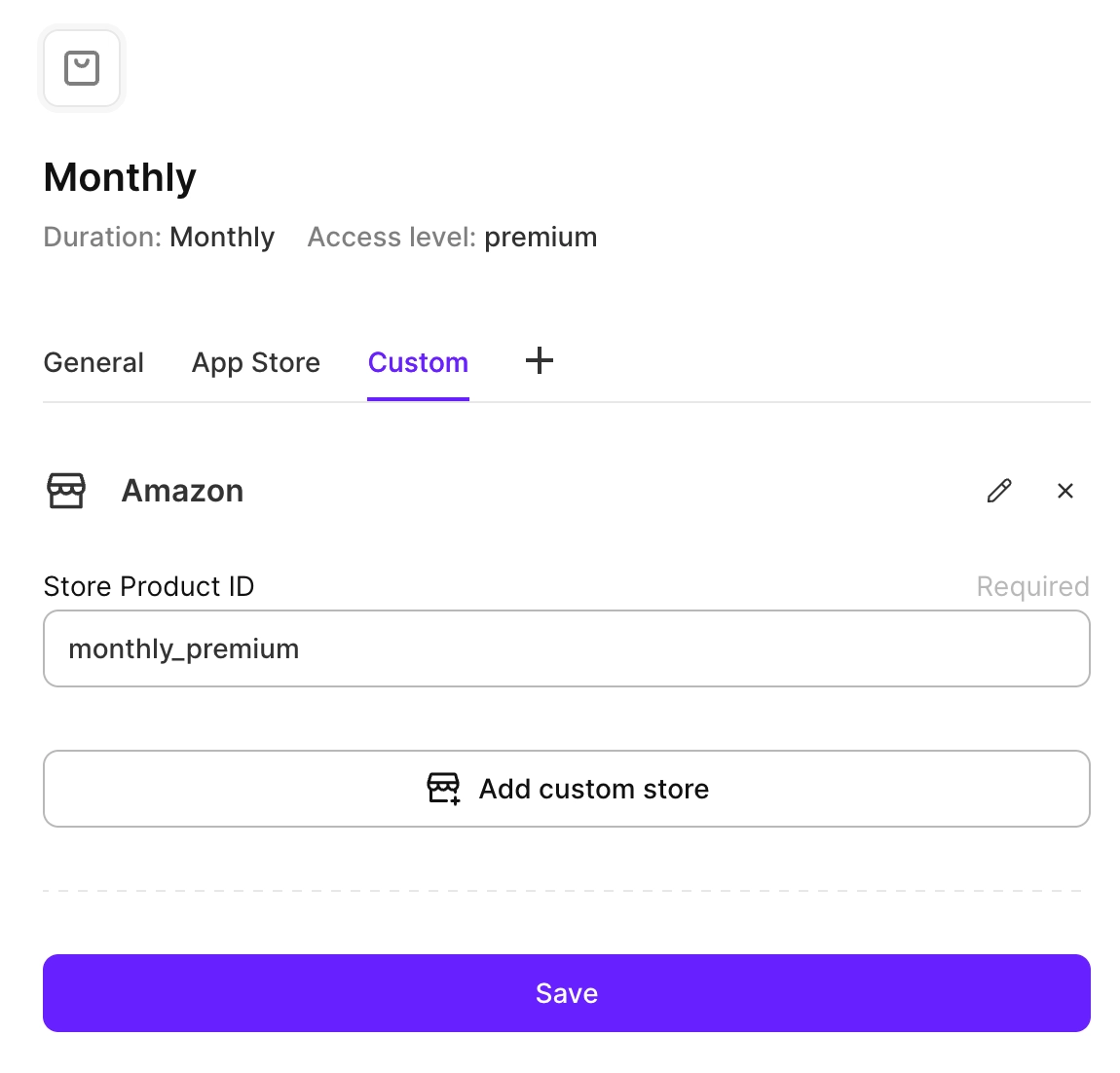
- + をクリックして Add a custom store を選択します。
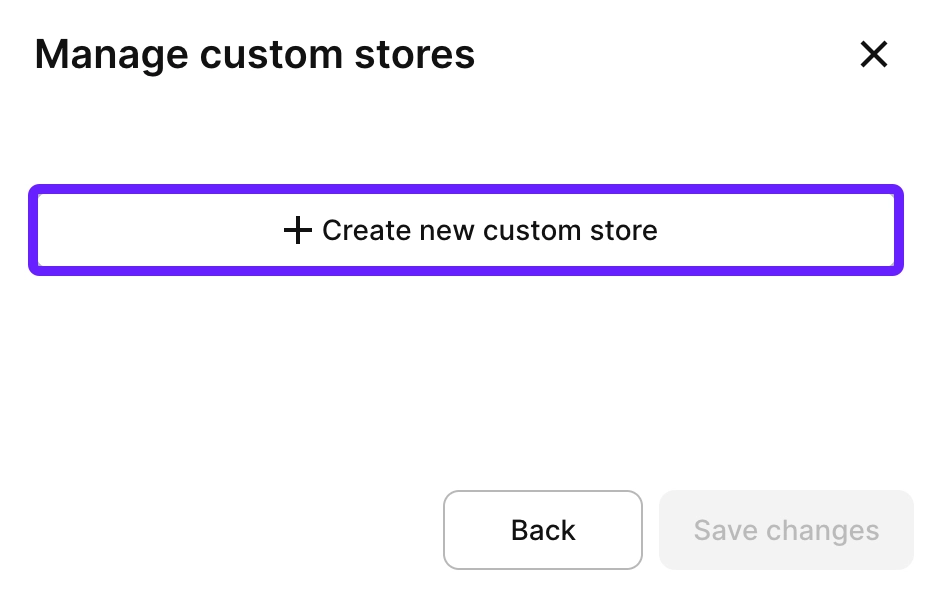
- Create new custom store をクリックします。
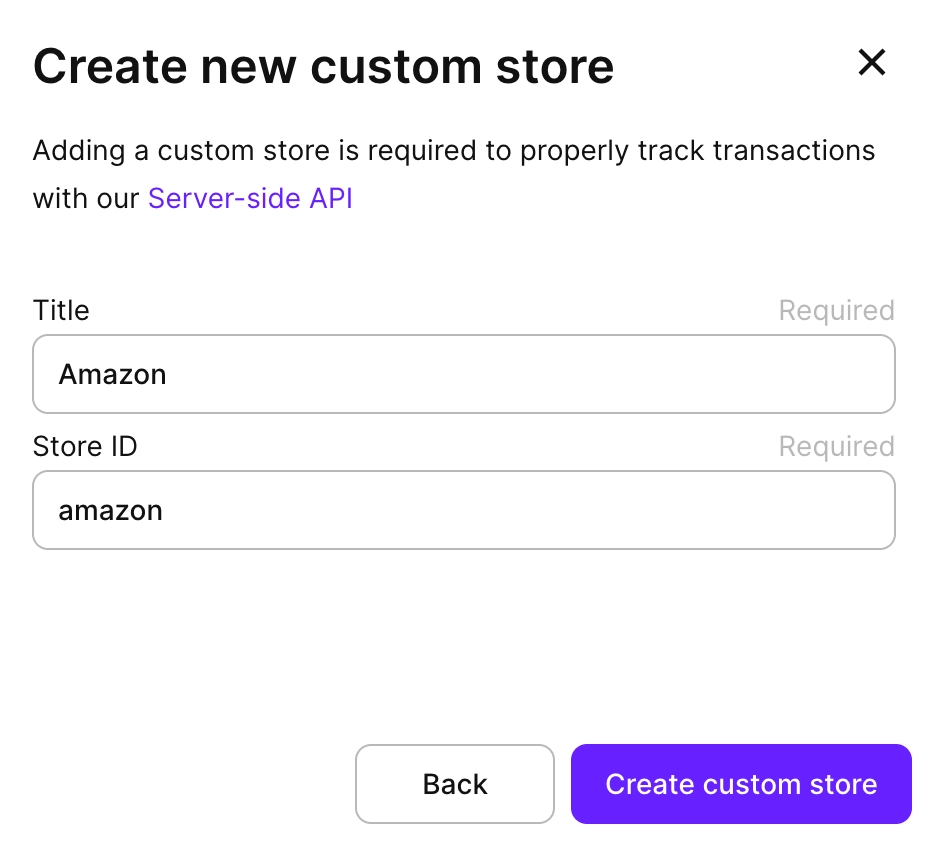
- ストアの名前(例:「Amazon Appstore」「Microsoft Store」「Web Store」)と ID を入力し、Create custom store をクリックします。
- Save changes をクリックして、プロダクトをカスタムストアに紐付けます。
- そのストア内のプロダクトと対応付けるために Store product ID を入力し、Save をクリックします。
ステップ 3. API 経由でトランザクションを同期する
カスタムストアで購入が完了したら、サーバーサイド API を使って Adapty にその情報を同期する必要があります。
この API 呼び出しによって以下が実行されます。
- Adapty にトランザクションを記録する
- 対応するアクセスレベルをユーザーに付与する
- 設定済みのインテグレーションやウェブフックをトリガーする
- アナリティクスにトランザクションを表示する
メソッドの完全なリファレンスはこちらをご覧ください。
curl --request POST \
--url https://api.adapty.io/api/v2/server-side-api/purchase/set/transaction/ \
--header 'Accept: application/json' \
--header 'Authorization: Api-Key YOUR_SECRET_API_KEY' \
--header 'Content-Type: application/json' \
--header 'adapty-customer-user-id: YOUR_CUSTOMER_USER_ID' \
--data '{
"purchase_type": "PRODUCT_PERIOD",
"store": "YOUR_CUSTOM_STORE",
"environment": "production",
"store_product_id": "YOUR_STORE_PRODUCT_ID",
"store_transaction_id": "STORE_TRANSACTION_ID",
"store_original_transaction_id": "ORIGINAL_TRANSACTION_ID",
"price": {
"country": "COUNTRY_CODE",
"currency": "CURRENCY_CODE",
"value": "YOUR_PRICE"
},
"purchased_at": "2024-01-15T10:30:00Z"
}'
重要なパラメーター:
- store: ステップ 2 で設定したカスタムストアの ID
- store_product_id: ステップ 2 で設定したストアプロダクト ID
- store_transaction_id: このトランザクションの一意の識別子
- purchased_at: 購入が発生した ISO 8601 形式のタイムスタンプ
- price: ユーザーが支払った金額
ステップ 4. アプリでアクセスを確認する
トランザクションが同期されると、ユーザーのプロファイルに新しいアクセスレベルが自動的に反映されます。
ユーザーがモバイルアプリを開いたら、プロファイルを取得してサブスクリプションの状態を確認し、プレミアム機能のロックを解除します。
do {
let profile = try await Adapty.getProfile()
if profile.accessLevels["YOUR_ACCESS_LEVEL"]?.isActive ?? false {
// grant access to premium features
}
} catch {
// handle the error
}
Adapty.getProfile { result in
if let profile = try? result.get() {
// check the access
if profile.accessLevels["YOUR_ACCESS_LEVEL"]?.isActive ?? false {
// grant access to premium features
}
}
}
Adapty.getProfile { result ->
when (result) {
is AdaptyResult.Success -> {
val profile = result.value
// check the access
if (profile.accessLevels["YOUR_ACCESS_LEVEL"]?.isActive == true) {
// grant access to premium features
}
}
is AdaptyResult.Error -> {
val error = result.error
// handle the error
}
}
}
Adapty.getProfile(result -> {
if (result instanceof AdaptyResult.Success) {
AdaptyProfile profile = ((AdaptyResult.Success<AdaptyProfile>) result).getValue();
// check the access
if (profile.getAccessLevels().get("YOUR_ACCESS_LEVEL") != null && profile.getAccessLevels().get("YOUR_ACCESS_LEVEL").getIsActive()) {
// grant access to premium features
}
} else if (result instanceof AdaptyResult.Error) {
AdaptyError error = ((AdaptyResult.Error) result).getError();
// handle the error
}
});
try {
const profile = await adapty.getProfile();
// check the access
if (profile.accessLevels["YOUR_ACCESS_LEVEL"]?.isActive) {
// grant access to premium features
}
} catch (error) {
// handle the error
}
try {
final profile = await Adapty().getProfile();
// check the access
if (profile.accessLevels["YOUR_ACCESS_LEVEL"]?.isActive ?? false) {
// grant access to premium features
}
} on AdaptyError catch (adaptyError) {
// handle the error
} catch (e) {
}
Adapty.GetProfile((profile, error) => {
if (error != null) {
// handle the error
return;
}
// check the access
if (profile.AccessLevels["YOUR_ACCESS_LEVEL"]?.IsActive ?? false) {
// grant access to premium features
}
});
Adapty.getProfile()
.onSuccess { profile ->
// check the access
if (profile.accessLevels["YOUR_ACCESS_LEVEL"]?.isActive == true) {
// grant access to premium features
}
}
.onError { error ->
// handle the error
}
try {
const profile = await adapty.getProfile();
// check the access
if (profile.accessLevels["YOUR_ACCESS_LEVEL"]?.isActive) {
// grant access to premium features
}
} catch (error) {
// handle the error
}