


RevenueCat gives you infrastructure. Adapty gives you growth







The RevenueCat alternative built for growth

Build native onboarding and paywalls
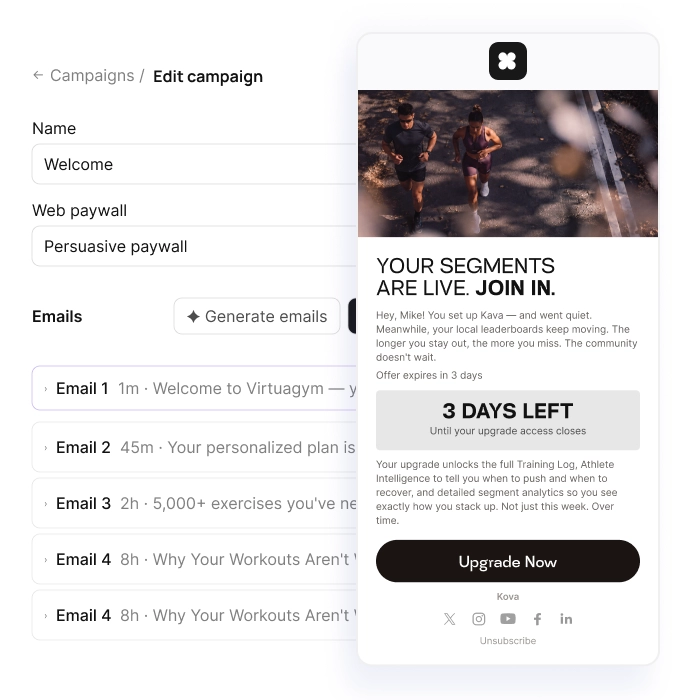
Create onboarding, paywalls, upsells, and more as one native flow. Every screen runs inside your app.
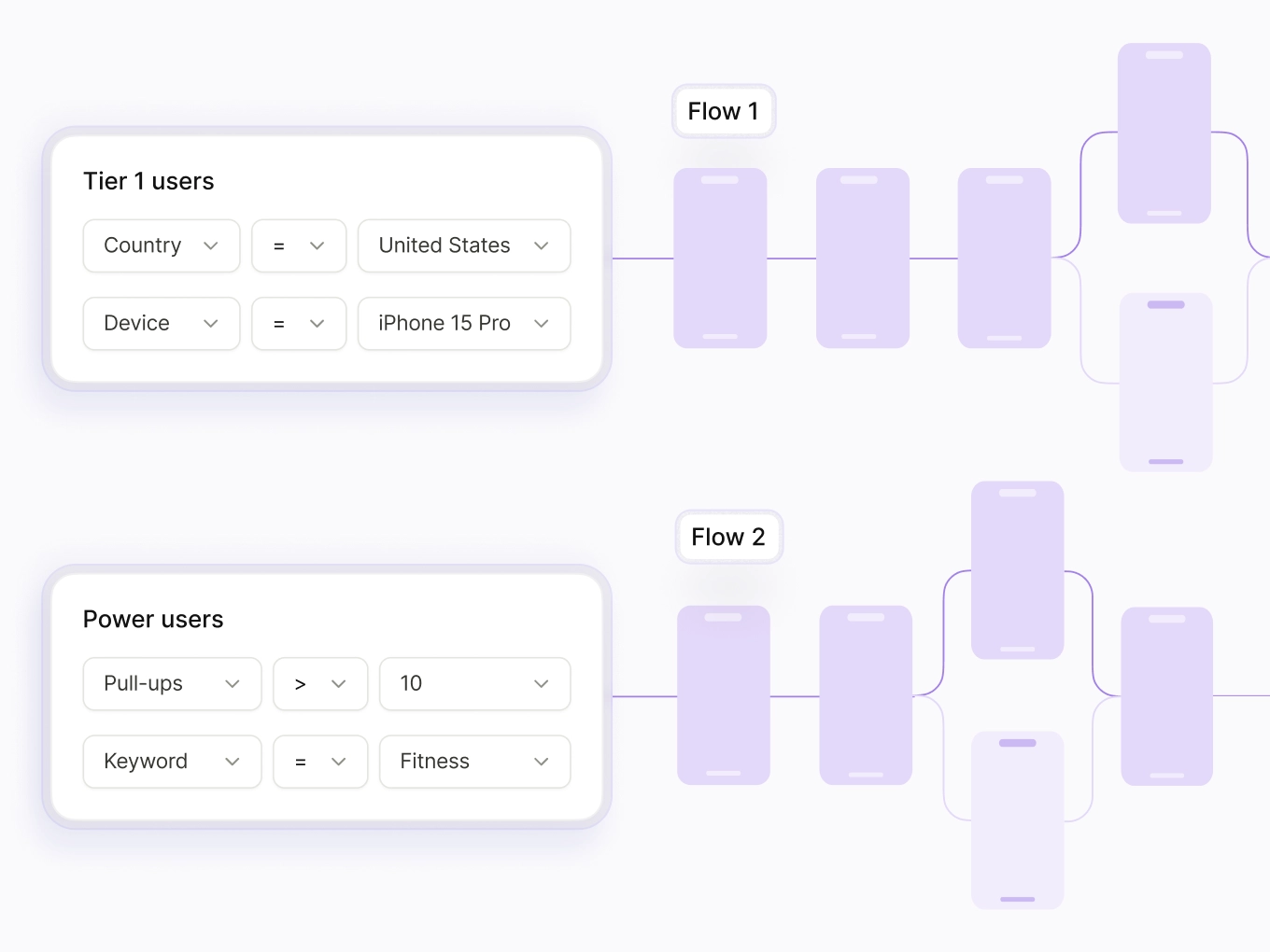
Personalize every flow by where users came from
Show different flows based on campaign, ad group, keyword, creative, country, and more across every acquisition channel.
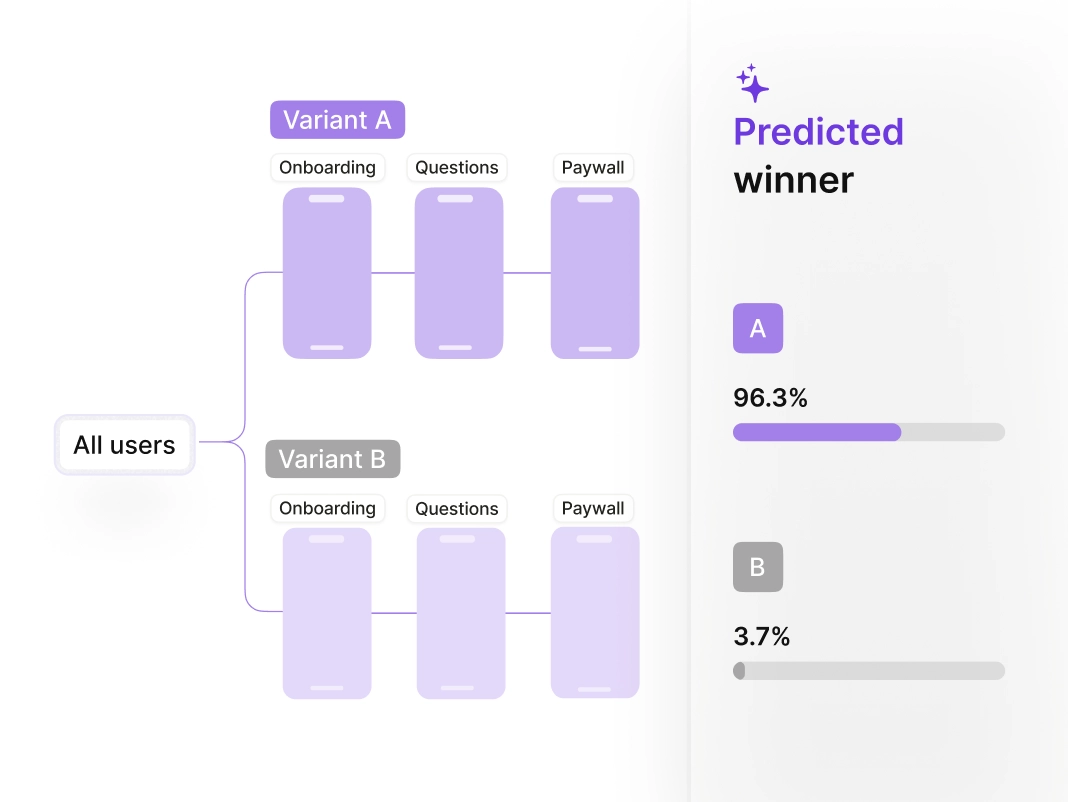
Run more experiments with the same traffic
Test up to 20 variants with the traffic split you choose. Results update in real time.
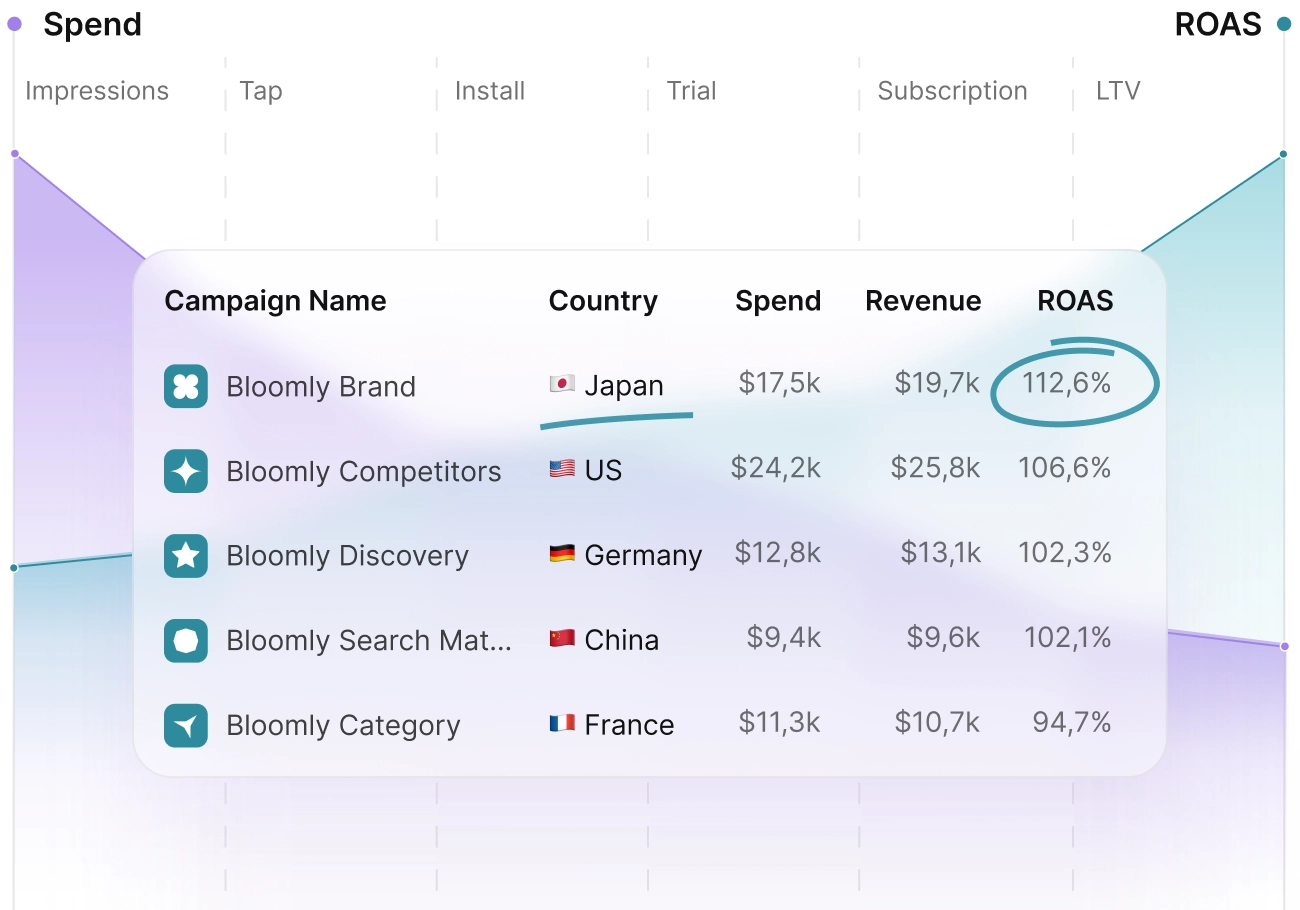
Connect marketing spend to revenue
Measure ROAS, CPA, spend, and subscription revenue down to every campaign, ad group, keyword, and creative.
Adapty processes subscription revenue with the industry’s highest SLA Rate


Infrastructure built for revenue
A 1.5-second gap is enough to lose users before they ever see your paywall.
At $100K MRR, 5 hours of downtime can cost $3,000-$6,000 in lost revenue.
Measured on a production app using iPhone 16. Full paywall load time.
A 1.5-second gap is enough to lose users before they ever see your paywall.
At $100K MRR, 5 hours of downtime can cost $3,000-$6,000 in lost revenue.
Measured on a production app using iPhone 16. Full paywall load time.
Switch from RevenueCat without breaking subscriptions
Step 1. Scan your setup
Step 2. Import & migrate
Step 3. Go live
What teams build with Adapty

We’ve been using Adapty’s analytics for a long time, but the predictive analytics feature turned out to be our crystal ball for future growth. We highly rely on it to forecast our future revenue streams and adjust our investment strategies with more precision.

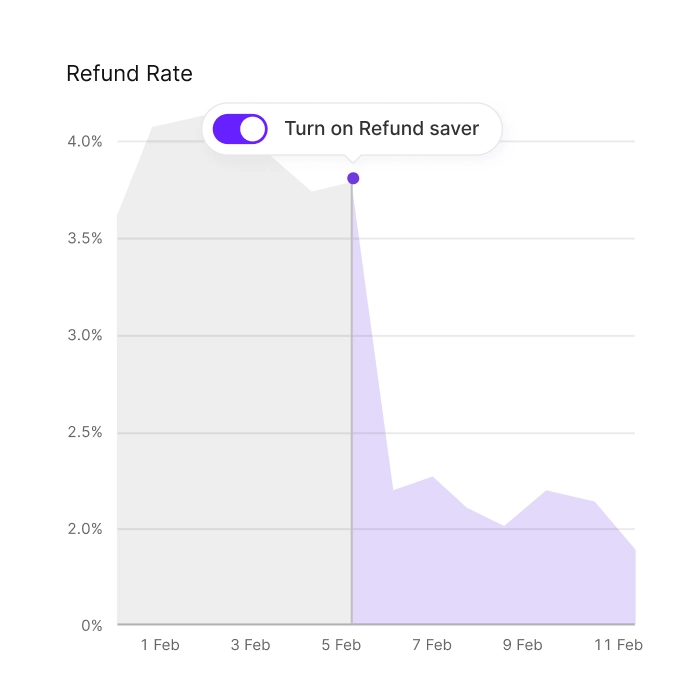
GlowUp outgrew RevenueCat, no advanced A/B testing, limited data, no control over paywalls. Switching to Adapty changed everything. They won 77% of refund requests, tripled daily revenue, and scaled to $1.2M ARR in 3 months with the same installs.

It felt cleaner, better designed. The architecture matched how I had already been thinking about placements and paywalls. My colleague felt the same. We both had both worked deeply with RevenueCat before, so the difference was obvious.
Your questions, answered
How much does RevenueCat cost?
RevenueCat is free up to $2,500 in monthly tracked revenue, then takes 1%. The fee applies to gross revenue, before Apple and Google take their cut, so an app grossing $100,000 pays $1,000 on a payout closer to $70,000. Adapty uses the same 1% rate on the same basis, with the free tier running to $5,000.
What does RevenueCat do?
RevenueCat handles subscription infrastructure: receipt validation, entitlement state, and subscriber sync across iOS, Android, and web, plus a paywall builder, A/B testing, and revenue analytics. Teams adopt it to avoid maintaining StoreKit and Play Billing logic themselves. Adapty covers the same infrastructure and adds native onboarding flows, targeting on acquisition data, and ROAS reporting down to the creative.
Do I need RevenueCat if I already use Stripe?
Yes, if you sell inside a mobile app. Stripe processes web payments and has no visibility into App Store or Play purchases, so it can’t validate receipts, track entitlements, or tell you whether a subscriber renewed on iOS. RevenueCat and Adapty both sit across store billing and web billing and give you one subscriber record. Stripe stays your web processor either way.
What are the best RevenueCat alternatives?
You have two directions: another third-party platform, or building on StoreKit 2 and Play Billing in-house. In-house means owning receipt validation, entitlement edge cases, and store API changes forever, which is a permanent engineering line item rather than a one-time build. Adapty runs the infrastructure and the growth tooling on one SDK, so you get the paywall testing without a second vendor or a backend team.
What is the difference between Adapty and RevenueCat?
Both run the same infrastructure job. Adapty renders onboarding, paywall, and upsell as one native flow, runs 20 test variants with custom weights against RevenueCat’s 4, targets on 20+ attributes including Apple Ads attribution without an MMP, and ties spend to subscription revenue per creative.
Can I switch from RevenueCat without losing subscribers?
Yes. Adapty imports your products, entitlements, and subscription history, so paying users keep uninterrupted access through the release. You route App Store Server Notifications and Google Play Real-Time Developer Notifications to Adapty, map products to entitlements, then swap the SDK.
Should I use Unity IAP or a subscription platform?
Unity IAP handles the store transaction. It does not manage what happens after: subscriber state across iOS and Android, entitlement logic, paywall changes without a build, or subscription analytics. Teams shipping subscription games usually run both, Unity IAP for the purchase and a subscription platform for everything downstream. Adapty’s Unity SDK covers receipt validation, cross-platform subscriber sync, remote paywalls, and A/B testing, so you change pricing and offers from the dashboard instead of shipping a new build.
Does Adapty handle web-to-app funnels?
Yes, through FunnelFox, built specifically for web-to-app. RevenueCat bundles funnels into its platform. FunnelFox runs as a dedicated product, so you get deeper web checkout, paywall, and payment-provider control than a bundled funnel builder offers. You can run FunnelFox alongside Adapty or on its own.