
Welmi

Text on Pic
Highlights
- Subscription revenue up by about 50%
- MRR up by 18%
- ARPPU up by 13%
Optimizing, but not progressing
The team behind this productivity app understood the value of experiments, but couldn’t pinpoint the levers that would bring the largest uplift. Before Autopilot, they had already tried:
- New paywall designs and visuals
- Different headlines, benefit copy, and CTAs
- A few manual price changes in App Store Connect
These tweaks helped engagement, but none of them created a step change in revenue. After several rounds, the team felt they were “good enough” on pricing and shifted attention elsewhere.

Tests with the most potential
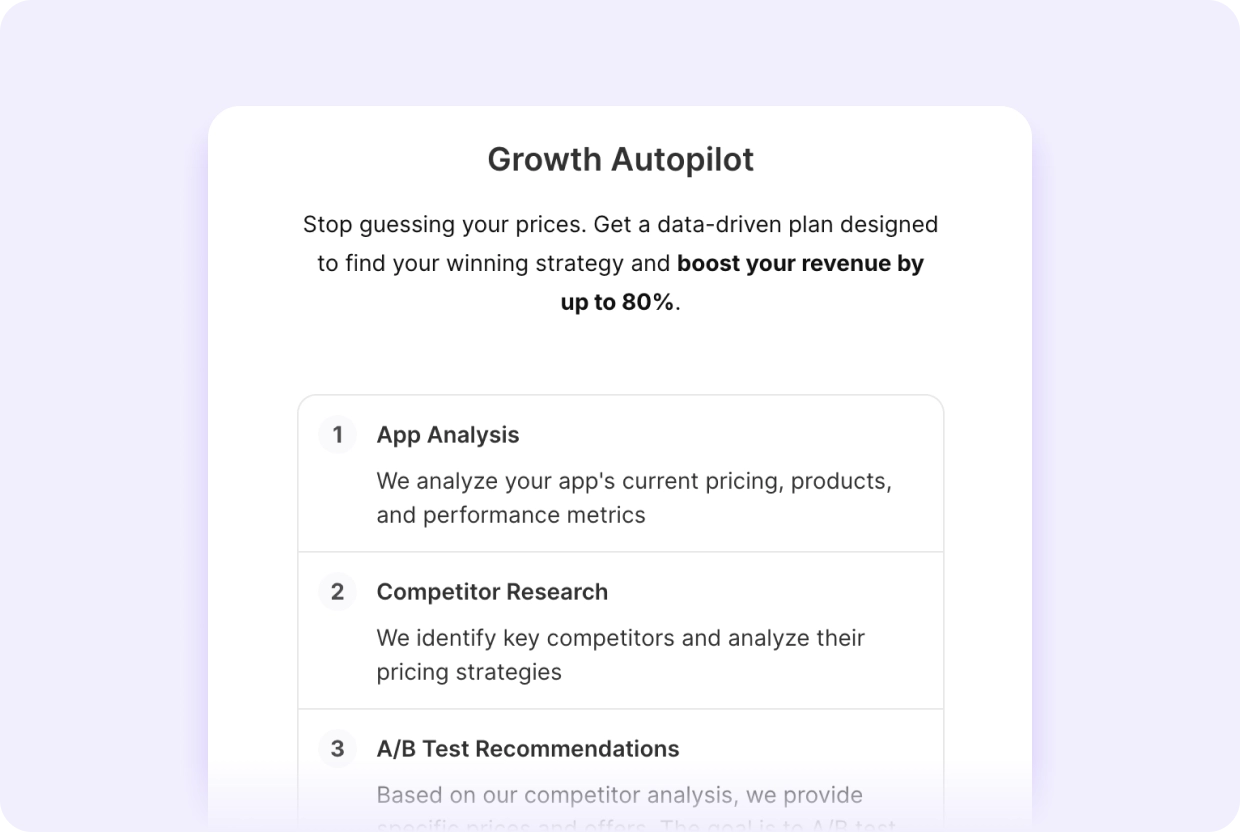
After learning about Autopilot from Adapty, the team gave it a shot. Our tool analyzed:
- The current plans and prices on the live paywall
- Pricing patterns of similar productivity apps
- Anonymized benchmarks across thousands of subscription apps
The analysis surfaced a few clear gaps that allowed to formulate clear experiment ideas based on them.
- Adding a weekly plan to highlight the cost-saving benefits of the annual subscription.
- Changing annual plan pricing to capture more revenue without breaking conversion.
- Introducing a free trial to reduce friction for first-time subscribers.

How the experiments played out
The team followed the plan in order and watched the numbers month by month.
Experiment 1: Add a weekly plan
They started by adding a weekly plan at the price Autopilot recommended. This immediately changed how users interacted with the paywall. More people explored the pricing options. The weekly plan attracted users who preferred small commitments.
At the same time, the annual plan began to look more appealing when compared to weekly, even though its price had not changed yet.
Experiment 2: Raise the annual price
The team first raised the annual price to match the benchmark range while keeping it cheaper than the weekly plan on a per-day basis. The annual conversion rate stayed strong.
After that, the team added a clear weekly comparison. They showed how much the yearly plan costs per week next to the weekly subscription price. This simple reference point helped users see the value difference instantly and nudged more of them toward the annual option.
As a result, revenue per annual subscriber grew, and the annual plan began to take a larger share of total purchases.
Experiment 3: Add a 3-day trial to annual
After the new structure settled, the team introduced a 3-day trial for the annual plan. This became the turning point. More users chose to start a trial instead of dropping at the paywall.
During the testing, there were no large spikes in ad spend or big launches that could explain the jump on their own, which is why the team credits the new pricing structure and trial for most of the uplift.
Results: +50% in revenue, +13% in ARPPU
Autopilot test ideas successfully reignited the app’s stagnant growth.
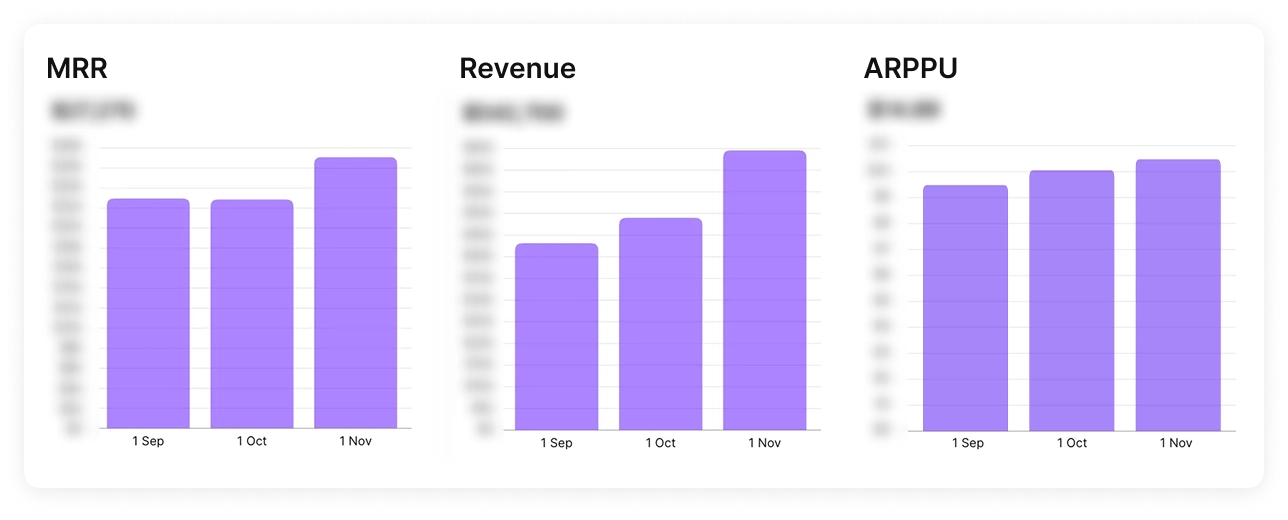
Revenue grew 50% over eight weeks, MRR increased by 18%, and ARPPU went up by 13%.
The biggest advantage was measurement clarity. Each experiment ran separately with clear windows between them, so the team could see exactly which changes drove which results.
The weekly plan made the annual option look better by comparison. The higher annual price brought in more per subscriber without dropping conversion rates. The free trial got more users past the paywall.
The outcome: a pricing structure the team could keep testing and improving, instead of a flat revenue line.
The team’s summary
With Autopilot, the team moved from a flat revenue line to a pricing program that they can keep iterating on, without turning every change into a risky guess.