


.am {
  --am-config-speed: .6s;
  --am-config-transition-type: ease;

  --am-start-delay: 0s;

  --am-start-opacity: 0;
  --am-start-translateX: 0;
  --am-start-translateY: 5rem;
  --am-start-scale: 1;

  --am-transition: transform var(--am-config-speed) var(--am-config-transition-type), opacity var(--am-config-speed) var(--am-config-transition-type);

  opacity: 1;
  transform: translate(0,0) scale(1);
  transition: var(--am-transition);
  transition-delay: var(--am-start-delay);
}
.am--hidden {
  opacity: var(--am-start-opacity);
  transform: translate(var(--am-start-translateX), var(--am-start-translateY)) scale(var(--am-start-scale));
}Your app is missing 7% of revenue. Recover it with email campaigns
30K subscription apps run on Adapty.
Now they earn from email with Adapty Mail







96% of your users will never pay you.
Email changes that.
Top apps earn up to 15% of revenue from email. Most apps earn zero.
We build them for you.
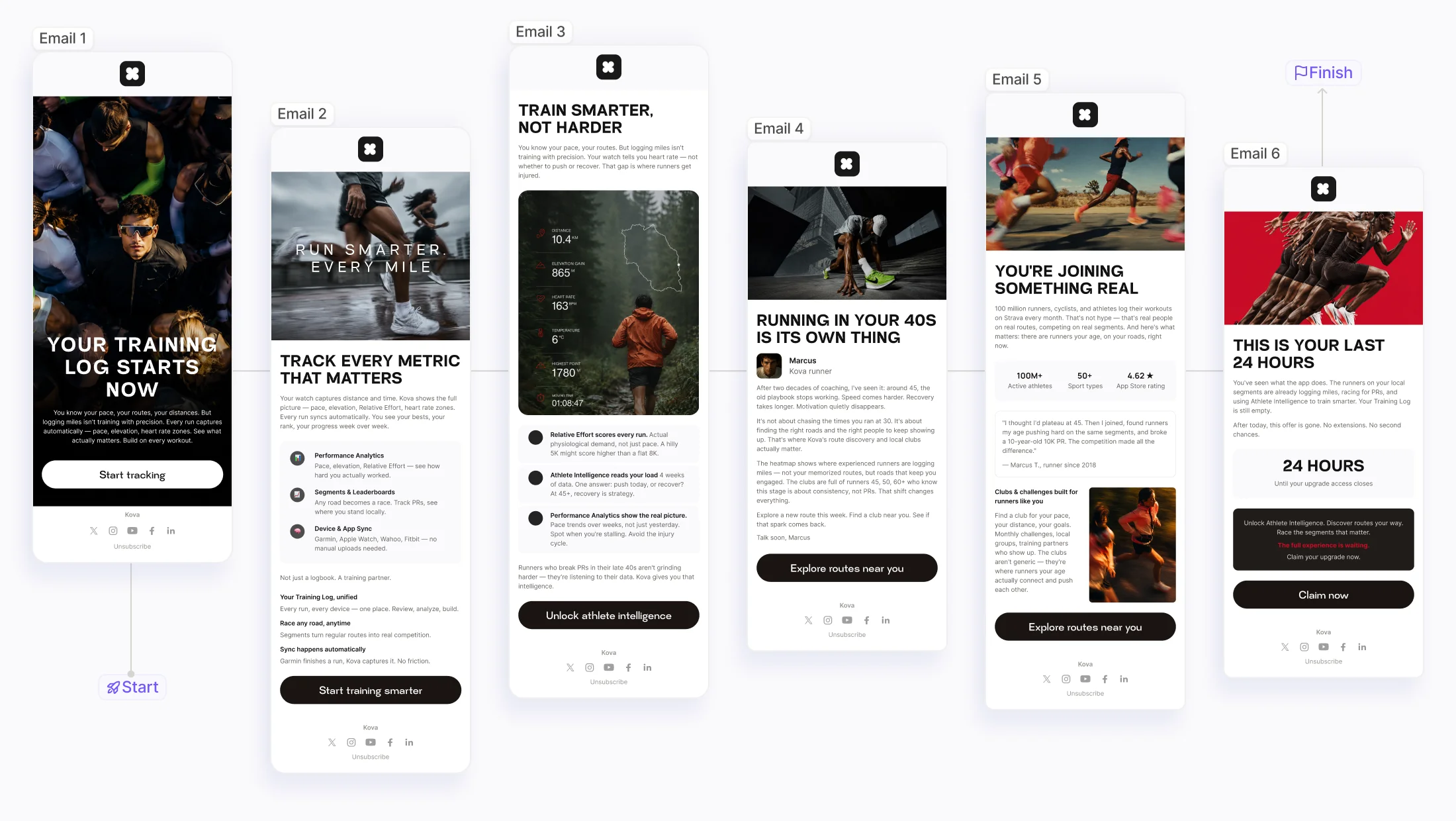
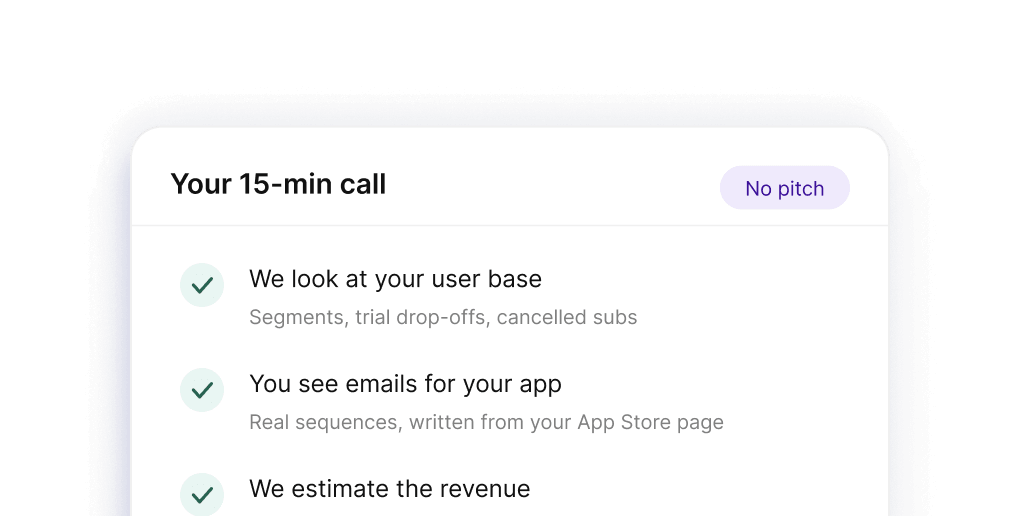
Your first campaign. Live today.
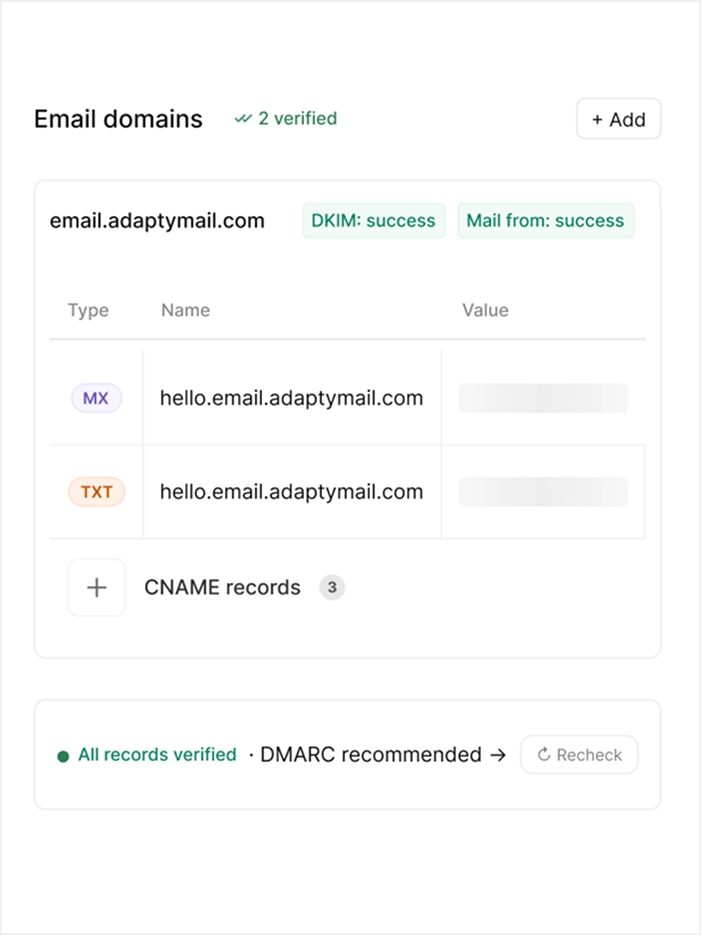
Connect your sending domain
Enter your domain. Adapty Mail generates the authentication records. Paste them into DNS, verify in minutes.
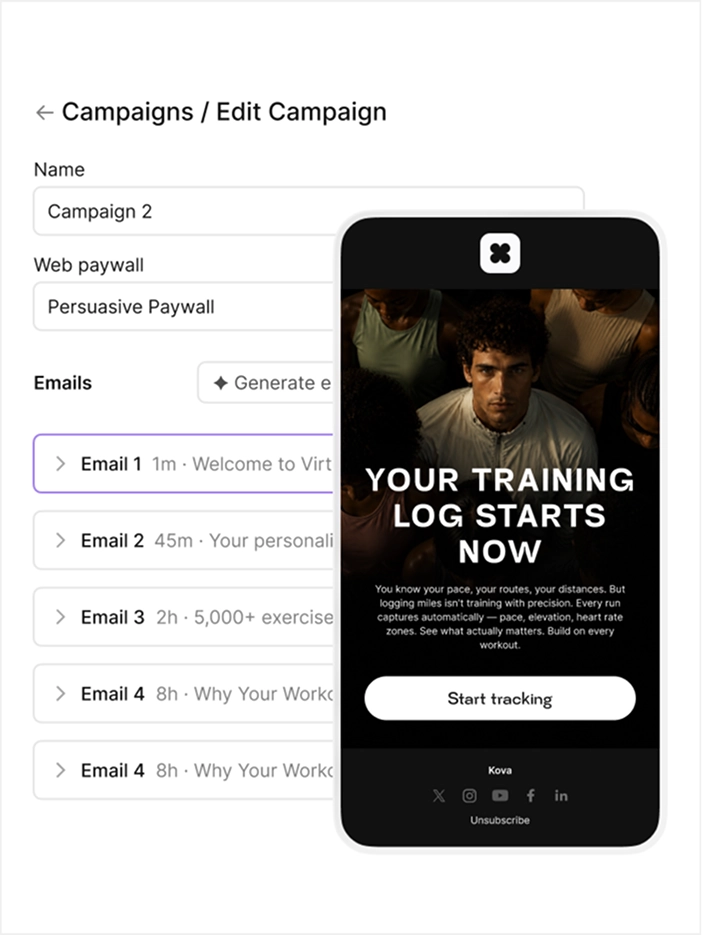
Generate sequences
Paste your App Store link. Adapty Mail compiles your brand context and writes the sequences. Most teams approve them as-is.
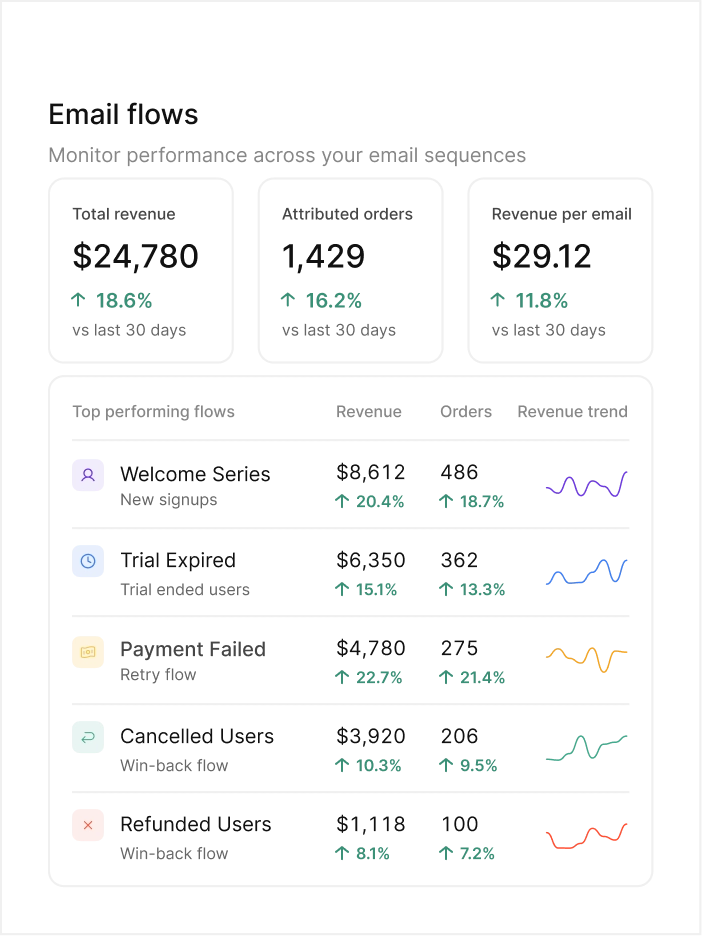
Launch and see what converts
Turn on your flows. Emails go to the right segments automatically, and the dashboard ties every purchase to the email that drove it.
Want to see your email flows?
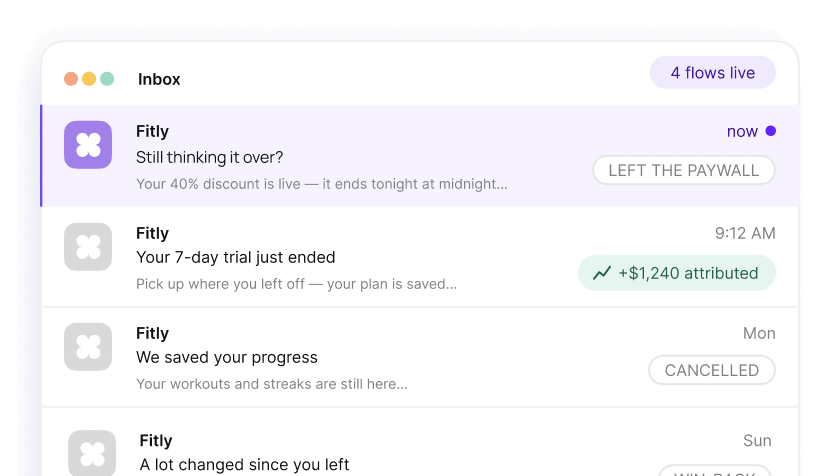
Everything handled. Nothing to maintain.

AI writes the campaigns

Deliverability handled

Runs on autopilot

See exactly what drives revenue
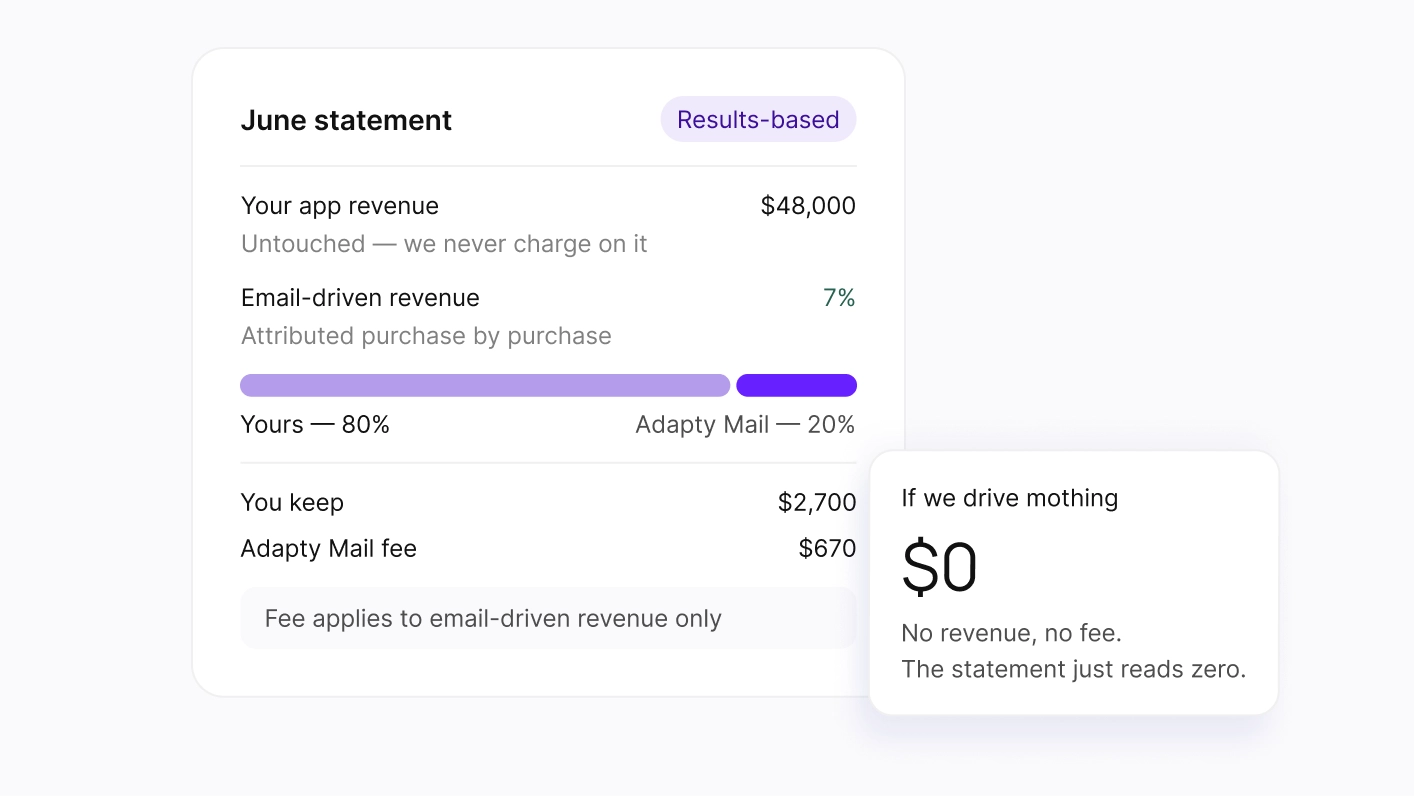
We earn when you earn
- No platform fees. No setup costs. No risk.
- If we don’t generate revenue, you pay nothing.
- When we do, we take 20% of the incremental revenue we drive.
We handle everything. You just launch.
Your domain, your reputation
Lands in inbox, not spam
Compliant, automatically
Your questions, answered
How long does setup take?
Connect your domain, paste your App Store link. Most teams are live within a day.
Do I need a custom domain?
Yes, you need a domain name. It’s a one-time setup: Adapty Mail generates the authentication records (DKIM, SPF, DMARC) and you paste them into your DNS settings. Takes about 5 minutes.
How do you handle deliverability?
We warm your domain automatically, configure authentication records, and monitor inbox placement. You don’t need to do anything manually.
How do you upload my subscriber list?
If you already use Adapty for analytics, your data is already there — zero migration. New to Adapty? Integration takes under an hour
How is Adapty Mail different from Braze or Customer.io?
Braze and Customer.io are built for web businesses. Configuring them for mobile subscriptions requires custom event tracking, a dedicated engineer, and months of setup — with $50K+/year minimums. Adapty Mail is built specifically for subscription apps: in-app purchase tracking is prebuilt, revenue attribution works out of the box, and pricing scales with results, not seats.
How is Adapty Mail different from Mailchimp or Klaviyo?
Mailchimp and Klaviyo track opens and clicks — metrics that don’t reflect what actually happens inside a mobile app. They can’t attribute in-app purchases to specific emails because iOS StoreKit and Google Play process transactions outside the browser. Adapty Mail closes that loop natively.
How is Adapty Mail different from Iterable?
Iterable is powerful but enterprise-first — it requires a full implementation project and a dedicated CRM team to run. Adapty Mail is designed for lean teams: AI generates the copy, sequences are pre-built for subscription lifecycle, and you don’t need a CRM specialist to operate it.
What if Adapty Mail doesn't generate revenue for my app?
You pay nothing. The 20% fee applies only to incremental revenue we drive — no results, no charge.