An offerwall is an in-app advertising format that presents users with a list of tasks or offers they can complete in exchange for virtual rewards, such as in-game currency, premium features, or other in-app benefits. This monetization strategy creates a mutually beneficial exchange where users gain value for their engagement while publishers generate revenue from advertisers who pay for completed actions.
Offerwalls function as an in-app marketplace, typically appearing as a dedicated section labeled “Free Rewards,” “Earn Coins,” or similar. Users voluntarily browse available offers and choose which tasks to complete based on the reward value and their interest level. This opt-in nature distinguishes offerwalls from traditional interruptive advertising formats, creating a more positive user experience.
While offerwalls are most commonly associated with mobile gaming, they have expanded across multiple app verticals including entertainment, lifestyle, dating, and utility applications. In apps using a hybrid monetization model, offerwalls can account for a significant portion of total ad revenue, making them a valuable component of a comprehensive monetization strategy.
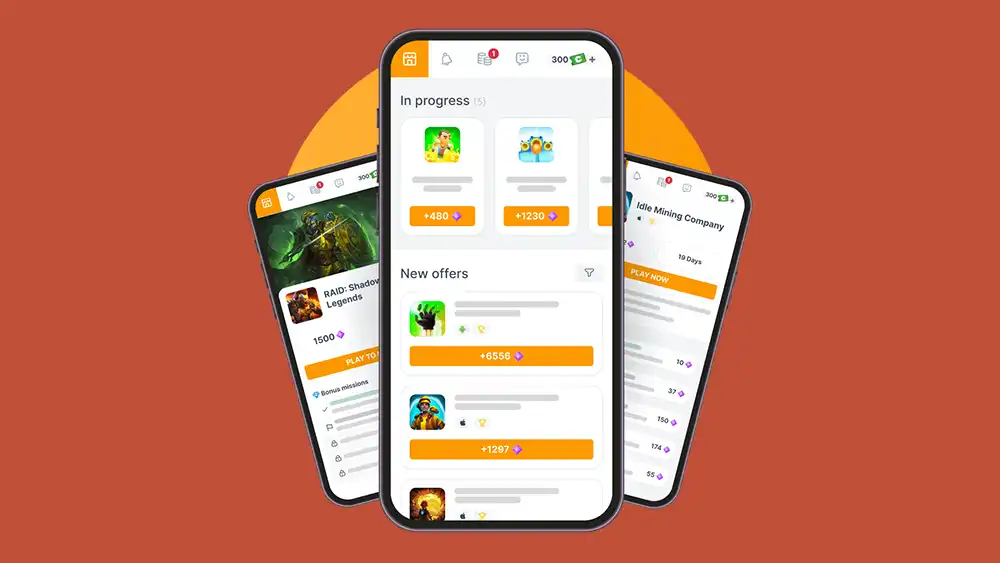
How do offerwall ads work?
Offerwalls operate on a performance-based advertising model where publishers only earn revenue when users successfully complete an offer. The process involves three key parties: the publisher (app developer), the advertiser, and the user.
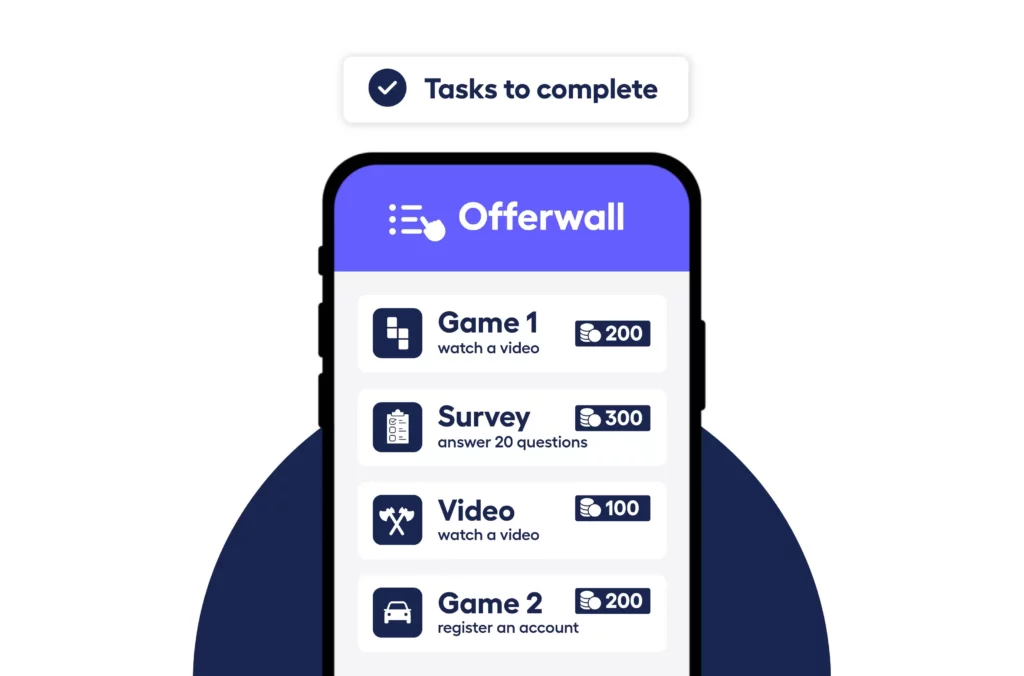
When a user accesses the offerwall within an app, they see a curated list of available tasks. These tasks can vary widely and may include watching video ads, downloading and installing other apps, completing surveys, signing up for services, reaching specific milestones within games, making purchases, or providing contact information.
Each offer displays the required action and the corresponding reward. Users select an offer based on their preferences and complete the designated task. Once the action is verified through tracking mechanisms integrated via SDK and server-to-server communication, the user receives their reward, which is credited to their in-app account.
The advertiser pays the publisher based on a Cost Per Action (CPA) or Cost Per Engagement (CPE) model. The publisher then allocates a portion of this payment to the user in the form of virtual rewards, while retaining the remainder as revenue. This creates a self-sustaining ecosystem where all parties benefit from the transaction.
Timing plays a crucial role in offerwall effectiveness. Publishers typically display offerwalls at strategic moments when users are most receptive, such as when they run out of in-game currency, need an extra life to continue playing, or want to access premium content without making a direct purchase.
What are the benefits of using offerwalls?
Offerwalls offer numerous advantages for both publishers and users, making them a valuable addition to any app monetization strategy.
Monetize non-paying users
One of the most significant benefits of offerwalls is the ability to generate revenue from users who would otherwise never spend money in your app. By engaging with offerwall ads, these users can access premium features and currency for free while you receive payment from advertisers. This expands your monetizable user base beyond the small percentage of users who make direct in-app purchases.
Increase user engagement and retention
Offerwalls give users a compelling reason to extend their sessions and return to your app more frequently. When users can earn rewards for completing tasks, they spend more time engaged with your app and develop stronger habits around returning. Research indicates that implementing offerwalls can boost retention rates significantly, which directly impacts your Average Revenue Per User (ARPU) and Lifetime Value (LTV).
Create a positive user experience
Unlike intrusive ad formats that interrupt the user journey, offerwalls put users in control of their advertising experience. Users voluntarily choose whether to engage with offers and select tasks that interest them. This opt-in approach eliminates the frustration associated with forced ad views and creates a sense of empowerment. Users appreciate having a free pathway to premium content, which builds goodwill and satisfaction.
Achieve higher eCPM rates
Effective Cost Per Mille (eCPM) measures the revenue earned from 1,000 ad impressions. Because offerwalls serve highly relevant content to already engaged users who have actively chosen to participate, engagement rates tend to be substantially higher than other ad formats. This results in some of the highest eCPM rates available in mobile advertising.
Diversify your revenue streams
Offerwalls work best as part of a hybrid monetization strategy alongside in-app subscriptions, direct in-app purchases, and other ad formats. This diversification reduces dependence on any single revenue source and creates multiple pathways to profitability. Different user segments can be monetized through different channels based on their preferences and behaviors.
Receive revenue without platform fees
Unlike in-app purchases processed through app stores, offerwall revenue typically bypasses platform fees. When users earn virtual currency through offerwall engagement, developers receive the full advertiser payment without the standard percentage taken by Apple or Google.
Challenges with offerwalls
Despite their benefits, offerwalls come with several challenges that publishers must navigate carefully.
iOS restrictions and limitations
Apple’s App Store guidelines restrict ads from incentivizing users to download other apps or games. This policy significantly limits the types of offers available on iOS offerwalls, as Cost Per Install (CPI) and certain Cost Per Engagement (CPE) campaigns are no longer permitted. Publishers must work within these constraints and focus on compliant offer types such as surveys, video views, and non-app-related tasks for iOS users.
Limited ad network support
Not all advertising networks support the offerwall format, which can restrict the variety and volume of available offers. Publishers may need to work with specialized offerwall providers or integrate multiple networks to maintain a diverse and engaging selection of tasks for users.
Balancing rewards with in-app purchases
Some developers worry that providing free access to premium currency will cannibalize their in-app purchase revenue. Finding the right balance requires careful consideration of reward values, offer frequency, and the overall economy of your app. The key is to offer enough value to keep users engaged without completely eliminating the incentive to make direct purchases.
Quality control and user experience
Not all offers provide equal value to users. Low-quality or misleading offers can damage user trust and create negative experiences. Publishers must carefully curate their offerwall content and work with reputable networks that maintain high standards for advertiser quality.
Fraud prevention
Like all performance-based advertising, offerwalls can be susceptible to fraudulent activity. Publishers need robust tracking and verification systems to ensure they only credit legitimate completions and maintain the integrity of their reward system.
Examples of offerwall platforms and providers
Several established platforms specialize in offerwall solutions for mobile app publishers. These providers offer SDK integration, advertiser relationships, and management tools to help publishers maximize their offerwall revenue.
Popular offerwall platforms include Tapjoy, which pioneered the mobile offerwall format and continues to be a market leader. IronSource offers a comprehensive monetization suite that includes offerwall functionality alongside other ad formats. AdGem (part of AdAction) provides performance-focused offerwall solutions with strong fraud prevention. Fyber specializes in rewarded advertising including offerwalls with advanced mediation capabilities.
Other notable providers include Adjoe, which focuses on time-based reward mechanics, and Digital Turbine, which offers broad reach through its network of app publishers. Unity Ads provides offerwall capabilities integrated with their popular game development platform.
When selecting an offerwall provider, consider factors such as advertiser quality, fill rates, geographic coverage, integration complexity, reporting capabilities, and revenue share terms. Many publishers work with multiple providers to maximize offer diversity and fill rates.
How to maximize offerwall revenue?
Optimizing your offerwall implementation requires attention to multiple factors, from placement and timing to user segmentation and creative design.
1. Segment your users strategically
Different users respond to different types of offers. Segment your audience based on relevant characteristics such as paying vs. non-paying users, new vs. returning users, engagement level, geographic location, and in-app behavior. This allows you to present more relevant offers to each group, increasing engagement rates and overall revenue.
For example, highly engaged non-payers may respond well to longer, higher-value offers, while casual users might prefer quick, simple tasks. Geographic segmentation helps you present offers that perform well in specific regions.
2. Optimize placement and timing
Where and when you present your offerwall significantly impacts engagement. Place entry points in high-visibility locations such as your app’s store, main menu, or dedicated rewards section. Consider triggering offerwall prompts at strategic moments when users are most likely to need rewards, such as when they run out of currency or fail a challenging level.
Avoid showing offerwalls too early in the user journey when new users haven’t yet developed an attachment to your app. Let users experience value first before introducing monetization opportunities.
3. Brand your offerwall to match your app
Customize the visual appearance of your offerwall to match your app’s design language. When the offerwall feels like a native part of the experience rather than an external advertisement, users are more likely to engage positively. Coordinate colors, fonts, icons, and overall styling with your app’s aesthetic.
4. Keep content fresh and relevant
Regularly update your offerwall with new offers to prevent fatigue among frequent users. Stale content leads to declining engagement over time. Work with your offerwall provider to ensure a steady rotation of fresh offers and remove underperforming campaigns promptly.
5. Create urgency with limited-time promotions
Run periodic promotional events that offer enhanced rewards for a limited time. Weekend specials, holiday promotions, or monthly bonus events can drive spikes in engagement and revenue. Communicate these opportunities through push notifications and in-app messaging to maximize participation.
6. Test and optimize continuously
Apply A/B testing methodologies to your offerwall implementation. Test different reward values, placement strategies, visual designs, and messaging to identify what resonates best with your users. Use analytics to track key metrics and make data-driven optimization decisions.
7. Use clear and compelling calls-to-action
Make the value proposition immediately obvious to users. Use action-oriented language like “Earn 500 Coins Now” or “Get Free Gems” that clearly communicates the benefit. Ensure the reward delivery is visually confirmed when users complete tasks to reinforce the positive experience.
How to measure your offerwall campaign?
Tracking the right metrics is essential for understanding offerwall performance and making informed optimization decisions.
Key metrics to monitor include Return on Investment (ROI), which measures the overall yield relative to implementation costs, and Return on Ad Spend (ROAS) for understanding revenue generated per advertising dollar if you’re promoting your offerwall.
Cost Per Action (CPA) tracks what advertisers pay for each completed action, while Cost Per Engagement (CPE) specifically measures the cost of in-app engagement milestones. eCPM (effective cost per mille) helps you compare offerwall performance against other ad formats on a standardized basis.
Engagement metrics matter equally. Track offerwall visit rate (percentage of users who access the offerwall), completion rate (percentage of started offers that get completed), average offers completed per user, and revenue per user who engages with the offerwall.
Monitor retention metrics to understand how offerwall engagement affects long-term user behavior. Compare retention rates between users who engage with offerwalls versus those who don’t to quantify the format’s impact on user loyalty.
Finally, track how offerwall engagement influences other monetization channels. Users who engage with offerwalls often develop stronger connections with your app and may be more likely to make direct purchases later.
Final thoughts
Offerwalls represent a mature and effective monetization strategy that benefits all parties in the mobile app ecosystem. Users gain free access to premium features and rewards, advertisers acquire engaged users who take meaningful actions, and publishers generate revenue while improving retention and engagement metrics.
Success with offerwalls requires thoughtful implementation, from strategic placement and user segmentation to continuous optimization and quality control. When integrated as part of a broader hybrid monetization strategy alongside subscriptions, in-app purchases, and other ad formats, offerwalls can significantly contribute to overall app revenue.
The key is maintaining focus on user experience throughout. Offerwalls work because they respect user choice and provide genuine value. Publishers who prioritize quality offers, clear communication, and seamless integration will see the strongest results from this powerful monetization tool.