Active users is a fundamental metric that counts the number of unique individuals who engage with your mobile app within a specific time period. This metric serves as a key indicator of app health, user engagement, and growth potential. By tracking active users across different time frames—daily (DAU), weekly (WAU), and monthly (MAU)—app developers and marketers can measure product stickiness, evaluate marketing effectiveness, and make data-driven decisions to optimize user acquisition and retention strategies.
What is an active user?
An active user is a unique individual who interacts with your mobile app within a defined time frame. Unlike simple download counts or total registered users, active users measure ongoing engagement—showing how many people actually use your app rather than just having it installed on their device.
The criteria for what constitutes “active” varies between organizations and depends on your app’s purpose. At its simplest, an active user might be anyone who opens the app. However, more meaningful definitions focus on specific actions that indicate genuine engagement: completing a purchase, sending a message, finishing a workout, or streaming content.
Each active user is identified through a unique identifier—such as a user ID, email address, or device identifier like IDFA or IDFV—ensuring the same person is counted only once within the measurement period, regardless of how many times they interact with the app.

Why are active users important?
Active users serve as the pulse check for your app’s overall health and provide critical insights across multiple business dimensions.
Measuring engagement and growth. An increasing volume of active users signals that your app delivers value and resonates with your target audience. Declining numbers serve as an early warning that something needs attention—whether it’s user experience issues, competitive pressure, or content staleness.
Evaluating marketing effectiveness. By tracking active users before, during, and after campaigns, you can assess whether your user acquisition efforts translate into genuine engagement. A campaign might drive downloads, but active user metrics reveal whether those new users actually stick around.
Foundation for revenue metrics. Active users form the basis for calculating essential business metrics. ARPU (Average Revenue Per User), ARPDAU, and Lifetime Value (LTV) all depend on accurate active user counts. Without reliable active user data, your revenue calculations lack meaning.
Supporting monetization strategies. For apps relying on advertising, in-app subscriptions, or in-app purchases, active users directly impact revenue potential. A larger, engaged user base creates more opportunities for monetization—whether through ad impressions, subscription conversions, or purchases.
Informing product decisions. Active user trends reveal how product changes affect engagement. A feature launch that boosts active users validates your development direction; one that causes a decline signals the need for iteration.
What is the difference between users and active users?
Understanding the distinction between different user counts is essential for accurate analysis.
Total users (or registered users) represents everyone who has ever created an account or installed your app. This number only grows over time—it doesn’t account for users who have abandoned your app, uninstalled it, or become inactive.
Active users measures engagement within a specific time window. It tells you how many people are actually using your app right now, not just how many have used it at some point in the past.
Consider a fitness app with 500,000 total registered users. If only 50,000 of them logged a workout in the past month, your MAU is 50,000—representing just 10% of your total user base. The gap between these numbers represents churned or dormant users.
This distinction matters because total user counts can be misleading. An app might boast millions of downloads while having only thousands of active users. Active user metrics cut through vanity numbers to reveal genuine engagement.
How to define activity criteria?
The most important decision in calculating active users is defining what qualifies someone as “active.” This definition directly impacts the usefulness of your data and should align with your business goals.
Simple engagement approach. The most basic definition counts anyone who opens the app or logs in. While easy to track, this approach doesn’t distinguish between users who glance at your app and those who engage meaningfully.
Action-based definition. A more valuable approach ties activity to specific meaningful actions:
- For e-commerce apps: adding items to cart, completing a purchase, or browsing products
- For gaming apps: completing a level, making progress, or engaging in multiplayer sessions
- For financial apps: checking balances, making transfers, or paying bills
- For content apps: watching a video, reading an article, or listening to a podcast
- For social apps: posting content, sending messages, or commenting
Feature-focused criteria. Identify the core features that deliver value in your app and define activity around their usage. If your photo editing app’s value proposition is its filters, an active user might be someone who applies at least one filter to an image.
Duration-based threshold. Some apps define activity based on minimum session length—for example, a user must spend at least 30 seconds in the app to count as active.
The key principle: choose criteria that indicate the user is receiving value from your app. The more precise your definition, the more actionable your insights become.
Core types of active user metrics
Active user metrics are typically measured across three standard time frames, each serving different analytical purposes.
Daily Active Users (DAU)
Daily Active Users (DAU) counts unique users who engage with your app within a 24-hour period. This metric is particularly relevant for apps designed for habitual, daily use—such as social media platforms, messaging apps, news apps, and mobile games.
DAU is highly sensitive to daily fluctuations. A spike might indicate successful push notification campaigns or viral content; a dip could signal technical issues or seasonal patterns. Monitoring DAU on a dashboard helps you quickly identify and respond to changes.
Gaming apps, social networks, and communication tools typically prioritize DAU because their business models depend on users forming daily habits.
Weekly Active Users (WAU)
Weekly Active Users (WAU) measures unique users over a 7-day window. This metric smooths out daily variations and is ideal for apps where engagement naturally follows weekly patterns.
WAU works well for productivity tools, professional apps, and services that align with work-week rhythms. It’s also useful for apps that users don’t need daily but rely on regularly—such as grocery delivery, workout apps, or analytics tools.
Monthly Active Users (MAU)
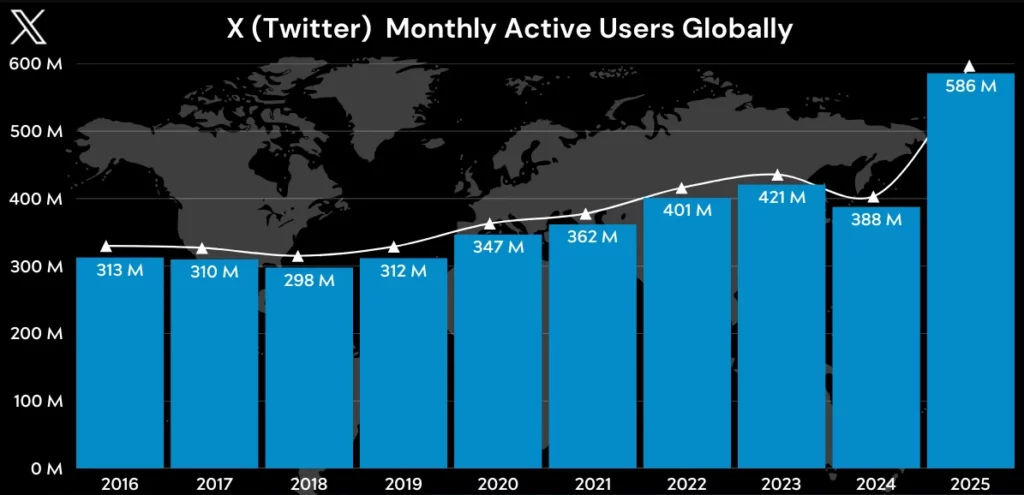
Monthly Active Users (MAU) tracks unique users within a 30-day period. This provides the broadest view of your user base and is commonly used for apps where less frequent engagement is expected and acceptable.
Travel apps, financial services, utility apps, and booking platforms often focus on MAU. Users might only need these apps a few times per month, making MAU a more appropriate engagement measure than DAU.
MAU is also the standard metric investors and stakeholders use to assess an app’s scale and growth trajectory.
How to calculate active users?
Calculating active users follows a consistent process regardless of the time frame:
Step 1: Define your activity criteria. Determine what specific action qualifies a user as active. Be consistent—changing your definition makes historical comparisons meaningless.
Step 2: Set your time period. Choose whether you’re measuring DAU (24 hours), WAU (7 days), or MAU (30 days). Decide if you’re using a rolling window or fixed calendar periods.
Step 3: Count unique users. Sum all users who meet your activity criteria within the period, ensuring each user is counted only once regardless of how many sessions or actions they completed.
Example calculation:
On a given day, your fitness app records the following activity:
- User A completes a workout, then closes the app
- User B opens the app but takes no action
- User C logs a meal and completes a workout
- User A returns later and logs their weight
If your definition of “active” requires completing at least one tracked action (workout, meal, weight), your DAU for that day equals 2:
- User A is active (counted once, despite multiple sessions)
- User B is not active (opened app but didn’t complete a qualifying action)
- User C is active
Common mistake to avoid: Double-counting users who perform multiple actions or have multiple sessions. Each unique user should appear only once in your count, regardless of engagement frequency.
What is a good DAU/MAU ratio?
The DAU/MAU ratio—often called the “stickiness ratio”—measures what proportion of your monthly users engage daily. It reveals how essential your app is to users’ daily routines.
Formula: DAU/MAU Ratio = (Daily Active Users ÷ Monthly Active Users) × 100%
Interpreting the ratio:
- 10% DAU/MAU: Users engage approximately 3 days per month
- 20% DAU/MAU: Users engage roughly 6 days per month—considered good across industries
- 25%+ DAU/MAU: Exceptional stickiness, indicating strong habitual usage
- 50%+ DAU/MAU: World-class engagement, typical of highly addictive apps like messaging platforms and social media
Industry benchmarks vary significantly:
- Social media and messaging apps: 30-50%+ (highest stickiness expectations)
- Gaming apps: 20-40% (varies by game type)
- News and content apps: 15-25%
- E-commerce apps: 8-15%
- Fintech apps: 10-22%
- Travel and booking apps: 5-10% (lower frequency is normal)
A higher ratio indicates stronger user loyalty and typically correlates with higher lifetime value. However, context matters—a banking app with a 15% stickiness ratio might be performing excellently, while the same ratio for a social media app would be concerning.
How to increase active users for your app?
Growing your active user base requires both acquiring new users and keeping existing ones engaged. Here are proven strategies:
Optimize push notifications. Push notifications remain one of the most effective re-engagement tools when used thoughtfully. Focus on delivering genuine value through personalized, relevant messages rather than generic alerts. Time your notifications based on user behavior patterns and always respect user preferences to avoid driving uninstalls.
Personalize in-app experiences. Tailored in-app messages and content significantly impact retention. Segment users based on behavior, preferences, and lifecycle stage to deliver relevant experiences. Research shows personalized in-app messaging can boost retention by 20-30%.
Implement effective onboarding. A smooth onboarding experience helps new users discover value quickly. Guide users to their “aha moment”—the point where they understand why your app matters to them—as rapidly as possible.
Use deep linking strategically. Deep linking ensures that when users click through from emails, ads, or notifications, they land exactly where they need to be. Removing friction from the re-engagement journey significantly improves conversion rates.
Leverage gamification and rewards. Daily login bonuses, streak rewards, achievement systems, and loyalty programs give users concrete reasons to return regularly. These mechanics create habits that translate into sustained active user growth.
Maintain regular communication. Email and SMS campaigns help maintain connections with users who haven’t visited recently. Share updates, highlight new features, or deliver personalized recommendations based on past behavior.
Run A/B tests on key experiences. Use paywall A/B testing and feature experiments to optimize conversion points and engagement flows. Small improvements in key experiences compound into significant active user gains over time.
Key takeaways
- Active users measure real engagement. Unlike downloads or registrations, active users show how many people actually use your app within a specific time period.
- Definition consistency is crucial. How you define “active” directly impacts data usefulness. Choose criteria aligned with your business goals and maintain consistency for meaningful trend analysis.
- Different time frames serve different purposes. DAU suits daily-use apps like social media and games; MAU works better for utilities and financial apps. Choose the metric that matches your expected usage patterns.
- The DAU/MAU ratio reveals stickiness. This ratio shows how frequently users return. A 20% ratio is generally good; 50%+ indicates exceptional engagement.
- Active users drive other metrics. Revenue calculations like ARPU, ARPDAU, and LTV all depend on accurate active user counts. Get this foundation right.
- Growth requires both acquisition and retention. Increasing active users means bringing in new users while keeping existing ones engaged through personalization, notifications, and consistent value delivery.
- Context matters for benchmarking. Industry norms vary significantly. A “good” active user count for a banking app differs greatly from expectations for a social media platform.