

Blush

HubX
Highlights
- 8M installs across the portfolio
- 99 A/B tests behind the growth
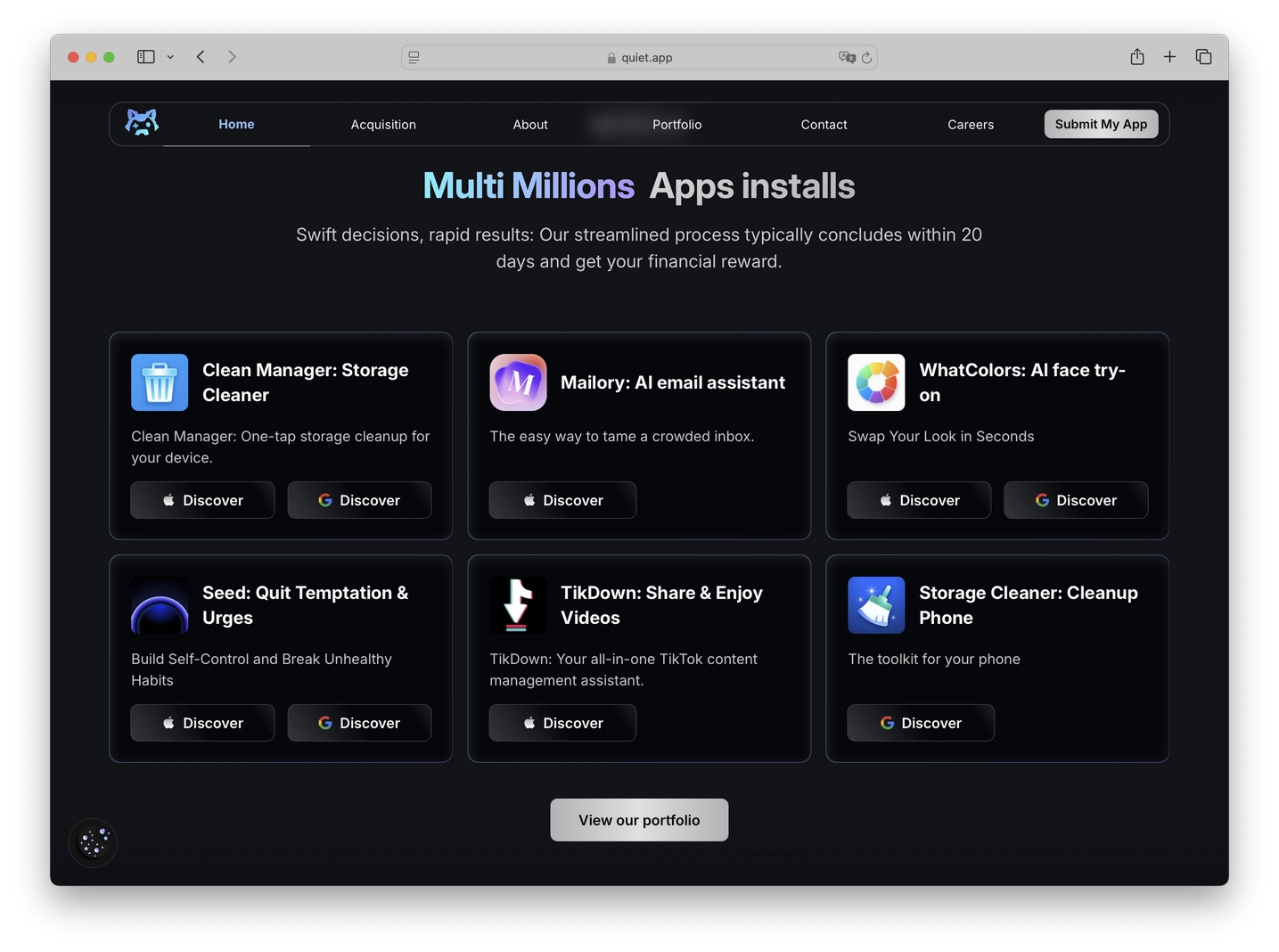
Quiet is a Paris app studio. The team builds apps in-house, acquires ones with early traction, and runs them on one rule: test everything, scale what works, and cut what doesn’t.
A lot of apps get cut rather than scaled. The call comes down to unit economics, whether an app pays back what it costs to acquire a user, which the team reads within days of a launch instead of betting on installs or a viral spike.
Every new app needs a fast verdict
When Quiet launches an app, it has a few weeks to show it can pay back what an install costs. If it can’t, it doesn’t get a scaling budget. That answer lies in how a cohort earns back its cost over time and how fast those users churn. Installs and trial numbers come in earlier, but they don’t tell you whether an app makes money.
Reaching that data is the slow part. With paywalls in one tool and revenue in another, the team exports both and lines them up by hand just to see whether a test made money, or waits on whoever owns reporting. Across a full portfolio, that wait comes back with every release.
One tool for tests and the money behind them
Adapty as Quiet's BI layer
Quiet wanted one system to run tests and see the revenue behind them. The team moved onto Adapty in August 2024 and built their testing routine around it.
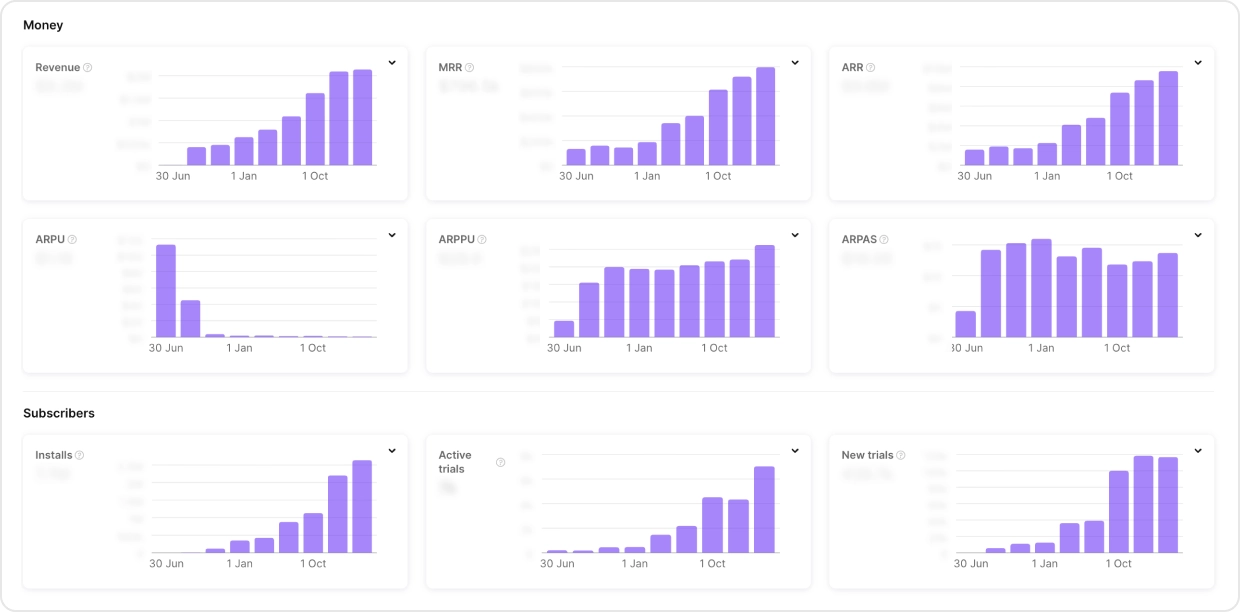
The team can follow a paywall test past the first conversion into what a cohort is worth months later, after renewals and churn, without leaving the dashboard.


How Quiet tests paywalls
Testing a paywall the usual way means waiting on an app release and engineering time, so most teams only do it now and then. Quiet has completed 99 A/B tests across its apps. With Adapty, the team launches a test straight from the dashboard, so a new idea can go live the same day it comes up, no release required.
One test shows why that pays off. Quiet was scaling an app and tried two versions of the main paywall button, white against purple, with traffic split evenly. The white button won, lifting trial conversion from 19% to 23.64%.
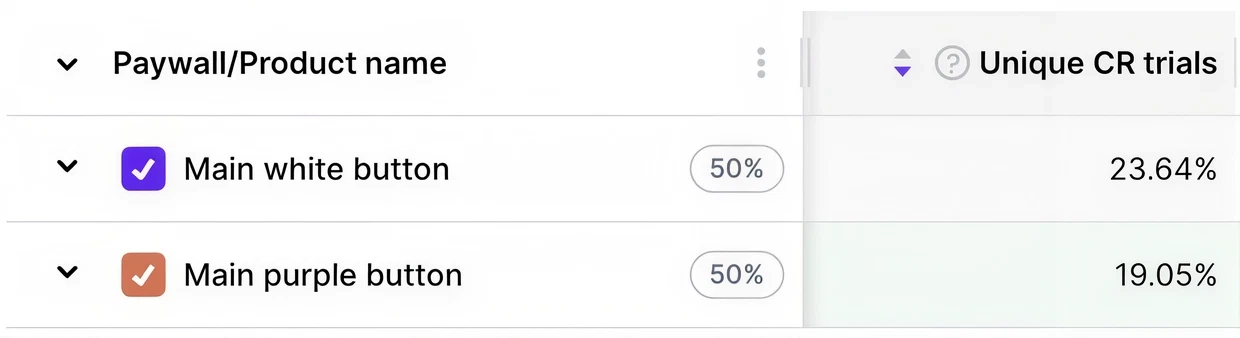
That looks minor until you attach the money. At a $2 install cost, $200 buys 100 users. The white button turned those into trials at $8.46 each, the purple one at $10.49. Carried through to a paying subscriber, white came out at $25.38 and purple at $31.47.
An app like this is worth roughly $28 per subscriber over its lifetime. At $25.38, the white button comes in under that and turns a profit on each one. At $31.47, the purple button runs over and loses money. The test cost nothing to run, and without it, Quiet might have scaled the losing version by default.
These tests run on both iOS and Android. One Adapty integration covers both stores, so the same experiment goes live on Google Play and the App Store.
The team behind the tool
Quiet runs its whole subscription setup on Adapty, so when a question comes up, a fast answer matters across the board.
Where Quiet stands now
A small team runs the whole catalog. The same people who launch and acquire the apps also test and scale them, and that portfolio now turns over $16.4M in ARR, from 8M installs and 71k+ subscribers.
The testing is what makes the pace possible. Quiet has shipped 99 A/B tests across its apps, and works the same way on every app it launches or acquires, across iOS and Android from one integration. The team judges each test against real LTV and churn in the dashboard they use to decide what to scale, so a small team can run far more tests than its size suggests.
Test your way to growth
Quiet’s results show that continuous testing, backed by analytics that live in the same place as your paywalls, can scale a whole portfolio without a separate data stack. Want to run your apps the same way?
Schedule a demo with the Adapty team.