

AppDevLabs

44pixels
Highlights
- Revenue doubled — driven entirely by experimentation
- 42 paywall A/B tests launched without engineering
Feeld launched in 2014 as a dating app designed for the curious, those open to experiencing people and relationships in new ways. With downloads and members in major cities worldwide, they’d built a dedicated, rapidly growing community.
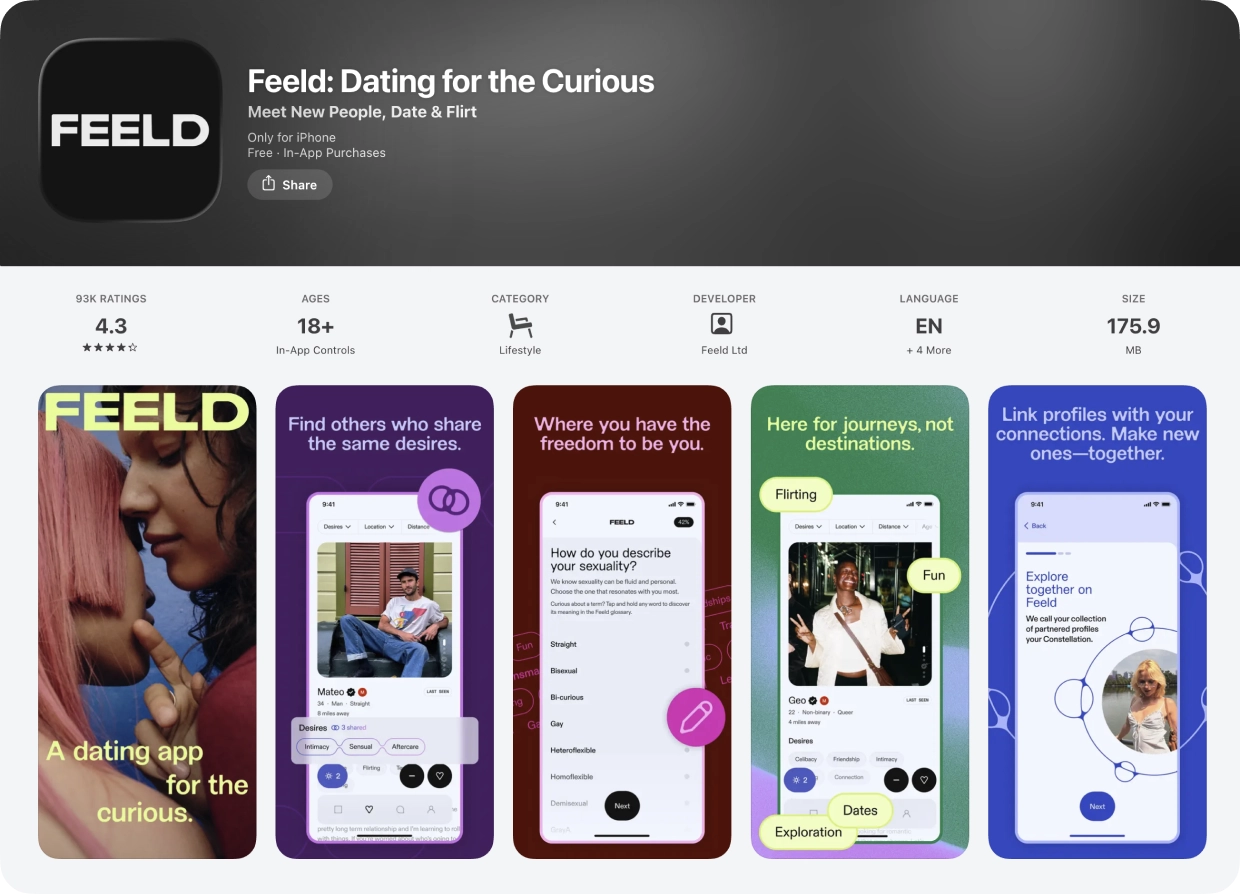
The team set an ambitious goal: double their revenue within a single year without adding complexity to their product or creating constraints for their development team.
The conventional approach would have called for a major redesign, new premium features, or significant price increases. Feeld chose a different path.
They decided to focus on experimentation and optimization: lots of small tests that could compound into significant results.
This led them to explore alternatives like Adapty.
The real cost of managing in-app purchases in-house
During a major app update, Feeld was rethinking how to support the next phase of its growth. With an ambitious goal to double revenue within a year, it became clear that their existing in-app purchase infrastructure wasn’t built for the pace of experimentation they wanted.


The growth team had clear roadmaps about pricing, packaging, and promotions that could potentially drive significant revenue, but implementing and testing required long lead times. It was clear that Feeld needed a more flexible approach.
Finding a better solution
After evaluating several options, Feeld discovered Adapty, a subscription management platform for mobile apps.
The integration coincided with a major app update, which helped to minimize disruption to the development process. The team gained capabilities they couldn’t have built in-house without months of dedicated engineering time.
Building a culture of experimentation
Feeld created an approach to monetization that focused on continuous testing. The team built their experimentation framework around four key principles:
- Market segmentation. Tests were analyzed by region, platform, and user demographics to spot patterns that might not be visible in the aggregate data.
- Faster testing cycles. With Adapty, they could launch new experiments without waiting for app releases or engineering availability.
- Multiple variants. Beyond simple A/B tests, they often explored complex combinations to understand what really drove purchasing decisions.
- Clear metrics. Every experiment had defined success criteria and was measured against specific KPIs.
This approach changed how quickly the team could test their ideas and implement what worked.
The increased testing frequency made a noticeable difference. They identified effective strategies more quickly and stopped pursuing approaches that didn’t deliver results.
Four key experiments that drove growth
Feeld ran dozens of experiments to test specific hypotheses about user behavior and monetization. Here are four examples that showcase their approach:
Packaging matters more than price
For their one-time purchase feature called “Pings” (a visibility boost for users), Feeld tested different package options rather than changing prices.
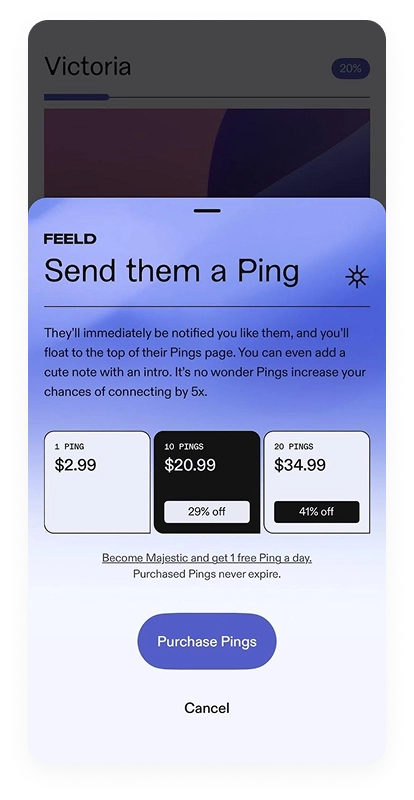
The experiment:
- They offered different package configurations to different user groups.
- The test focused on finding the right balance between price and value.
- Adapty’s segmentation tools allowed them to target specific markets.
The results: A package restructure alone was enough to grow revenue in their primary market.
Plan preferences vary by region
Most subscription apps default to monthly and annual billing cycles. Feeld tested adding weekly options to see if shorter commitment periods would appeal to specific user segments.
The experiment:
- They presented different billing options to different user groups.
- They analyzed results by region to identify market-specific preferences.
- They made no changes to the core product.
The results: The team found surprising regional variations. Some markets showed significant revenue increases with weekly plans, while others showed no change or even slight decreases.
Win-back strategies need local adaptation
Feeld wanted to understand what types of offers would best motivate churned subscribers to return.
The experiment:
- They tested various discount structures and promotional offers.
- They segmented users by region and subscription history.
- They tracked both reactivation rates and long-term value.
With Adapty, the team could implement these complex offer variations without involving engineering resources.
The results: The data revealed clear regional preferences, allowing Feeld to target win-back strategies optimized for each market.
Industry "best practices" aren't always best
Introductory discounts are common in subscription apps, but Feeld wanted to verify whether this practice delivered better results for their specific user base.
The experiment:
- They tested standard pricing against discounted introductory offers.
- They focused their analysis on both initial conversion and long-term retention.
- They conducted tests in their largest market.
The results: The experiment yielded unexpected findings. In some cases, standard pricing without discounts actually performed better over 90 days.
With each test, they gained insights to inform their strategy and refined their approach to experimentation.
The impact of continuous testing
By focusing on ongoing experimentation, Feeld achieved substantial growth within 12 months. 42 experiments launched, all without pulling in engineering resources — and each one feeding into a clearer picture of what moved revenue.
The results went beyond the numbers. Engineers could focus on core product work instead of maintaining subscription infrastructure, and the growth team stopped waiting for development cycles to test new ideas.
Small bets, compounded over time. That was the strategy — and it worked.
Ready to test your way to growth?
Feeld’s results show that systematic experimentation can drive substantial growth without requiring complex product changes or extensive engineering resources.
Want to achieve similar results for your subscription business? Schedule a demo with the Adapty team today.