

44pixels

Letterly
Highlights
- Migrated 500K daily users in one week with zero complaints
- Cleaned up custom code, moved to native placements
- Shifted focus from maintenance to optimization & paywall experiments
BibleChat is a faith-based AI app that offers personalized scripture conversations, daily verses, and Bible study resources. Founded by Romanian entrepreneurs Laurențiu Bălașa and Marius Iordache, the app launched in May 2023 and grew explosively, reaching 15 million users in one year and climbing to #1 in the U.S. App Store’s Reference category.
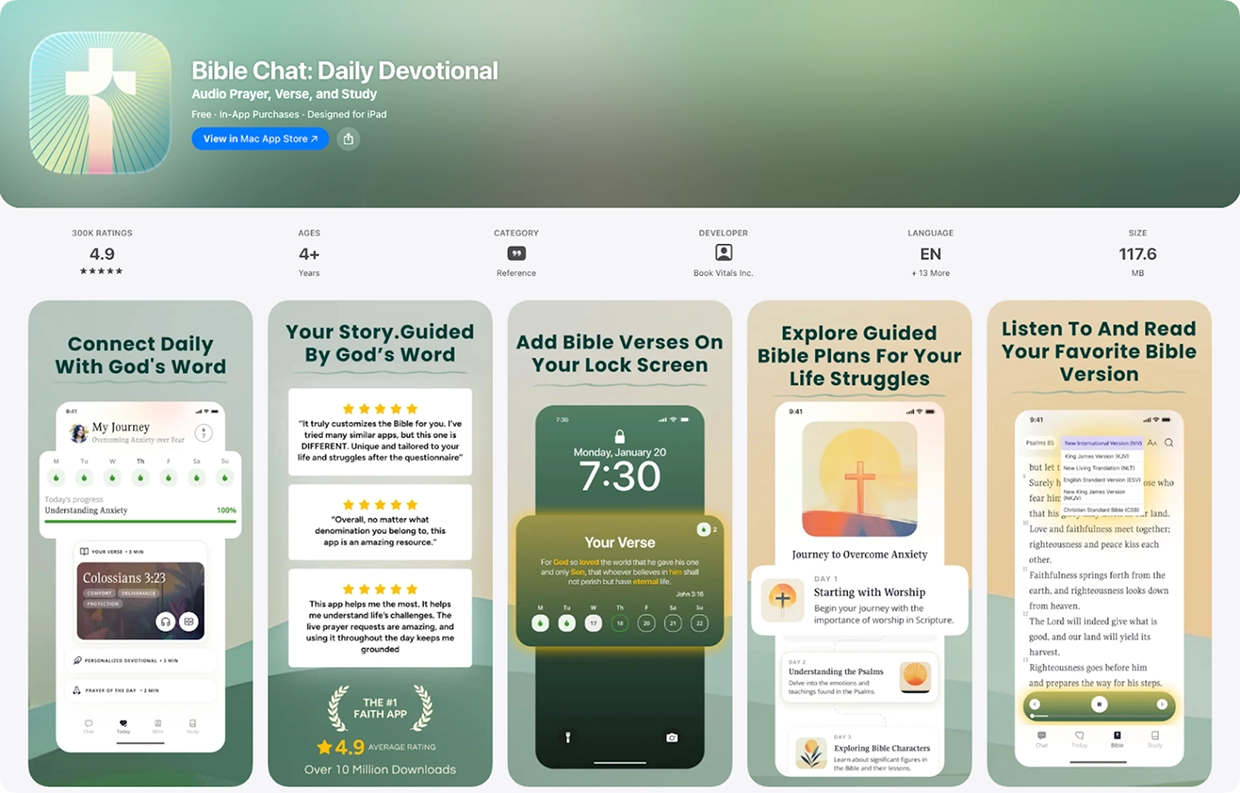
The team isn’t large. For the first year, Marius was the solo engineer handling iOS, backend, everything. Now they have iOS and Android developers, but it’s still a small, fast-moving operation. That kind of growth surfaces infrastructure challenges fast. They needed a subscription partner who could scale with them, be technically reliable, and responsive as a partner.
Just processing subscriptions wasn’t enough anymore
When BibleChat launched, they used RevenueCat for basic subscription processing. It handled receipts and transactions. As the app scaled, Marius (leading engineering) built custom placement logic and tooling on top of it, because the features they needed didn’t exist natively. RevenueCat handled the basics. But at 500K daily users with a lean team, they needed more.


The BibleChat team needed infrastructure that could handle their scale, a partner who moved at their speed, technical quality that wouldn’t slow them down, and native features like placements they’d been building themselves.
Better SDK architecture, better partnership
They started looking at alternatives. Switching subscription infrastructure at their scale wasn’t a light decision, but staying put had its own costs.
Marius evaluated Adapty’s SDK, and the quality difference was immediate:
For a team moving fast, SDK quality matters. It affects how quickly you can build, debug, and ship. The team had already built custom placement logic on top of their existing infrastructure. With Adapty’s native approach, they could remove that custom code entirely.
Switching infrastructure without breaking anything
Migration took about a week. Most of that time went to removing custom code that Adapty replaced with native infrastructure.
The stakes were high, but Marius understood the architecture well enough to move confidently:
The migration went through without a single support ticket or user complaint.
Historical data migration added another two weeks. The team had raw RevenueCat logs in BigQuery but needed to convert attribute formats. For a technical team, that was straightforward — a SQL query and processing time.
From maintaining code to running experiments
The immediate wins were technical: a cleaner codebase, the removal of custom code, and better SDK architecture. But what mattered more was what that infrastructure unlocked.
The team shifted from maintenance to optimization. They’re now running A/B tests on paywalls — something that wasn’t possible before. Next up: Adapty’s Onboarding Builder for automated retention testing. The shift is clear: less time maintaining custom code, more time optimizing.
Technical quality and partnership both matter
BibleChat chose Adapty because both technical quality and partnership mattered at their stage.
For small teams scaling fast, you need infrastructure built for optimization — processing transactions is a baseline. You need an SDK quality that doesn’t slow you down. And you need a partner invested in your growth.