In an era where customer acquisition costs continue to skyrocket, mobile app developers are rediscovering one of the oldest and most powerful marketing strategies: word-of-mouth referrals. But this isn’t your grandmother’s recommendation over the garden fence. Today’s referral programs are sophisticated growth engines that transform satisfied users into your most effective sales team.
The numbers tell a compelling story. According to Nielsen, 92% of consumers trust recommendations from friends and family over any other form of advertising. Referred customers have a 37% higher retention rate and are four times more likely to refer others, creating a self-perpetuating cycle of organic growth. Andreessen Horowitz General Partner Andrew Chen puts it bluntly: a successful referral program can become 20-30% of your entire acquisition mix.
The referral marketing software market reflects this growing appetite, projected to reach $7.24 billion by 2031. Companies investing in referral campaigns witness an average 86% increase in revenue compared to the previous year, with leads converting at 3 to 5 times the rate of other channels. For mobile apps specifically, referred users show an average of 200-300% higher conversion rates and revenue per user compared to other acquisition channels.
This guide will walk you through everything you need to know to build a referral program that drives meaningful growth for your mobile app – from the psychology behind why referrals work to practical implementation steps and real-world examples from apps that got it right.
Why mobile apps need a referral program
At its core, referral marketing works because it leverages one of the most powerful forces in human decision-making: trust. When your friend tells you an app changed their morning routine or finally helped them stick to a budget, that recommendation cuts through the noise of traditional advertising in a way no paid placement ever could.
Consider the economics. With paid acquisition channels becoming increasingly expensive and attribution growing murkier in the post-ATT world, referrals offer a refreshing alternative. The cost per referred customer often comes in significantly lower than traditional channels – Dropbox reduced customer acquisition costs by over 60% through their referral program. More importantly, these users tend to stick around: referred customers demonstrate 37% higher retention rates than those acquired through paid channels.
“Referral-sourced users are some of the highest quality users you can get,” notes Alex Bauer, Head of Market Strategy at Branch. “The leakiness of your funnel after the acquisition event depends on the channel, and referrals are one of the best ways to get users that are actually going to stick around.”
But perhaps the most overlooked benefit is the quality of user relationships. When someone joins your app because a trusted friend recommended it, they arrive with built-in social proof. They’re predisposed to give your app a fair chance, to explore features they might otherwise skip, and to become referrers themselves. This creates what growth experts call a viral loop: each new user potentially becoming a distribution channel for your next wave of users.
For subscription apps in particular, where long-term retention directly impacts lifetime value, these dynamics become even more pronounced. A user who arrives via referral isn’t just more likely to subscribe – they’re more likely to maintain that subscription and eventually recommend the app to their own network.
Core referral program features
Building a referral program isn’t just about offering discounts. A well-designed system requires several interlocking components that work together to create a seamless experience for both referrers and their friends.
Unique referral links and codes
Every user needs their own trackable identifier. This could be a personalized link (yourapp.com/invite/sarah123) or a simple code they can share. The key is ensuring reliable attribution – when a new user signs up, you need to know exactly who sent them. Modern mobile linking platforms use deferred deep linking to maintain this attribution even through the App Store install process, which traditionally breaks tracking.
Double-sided incentives
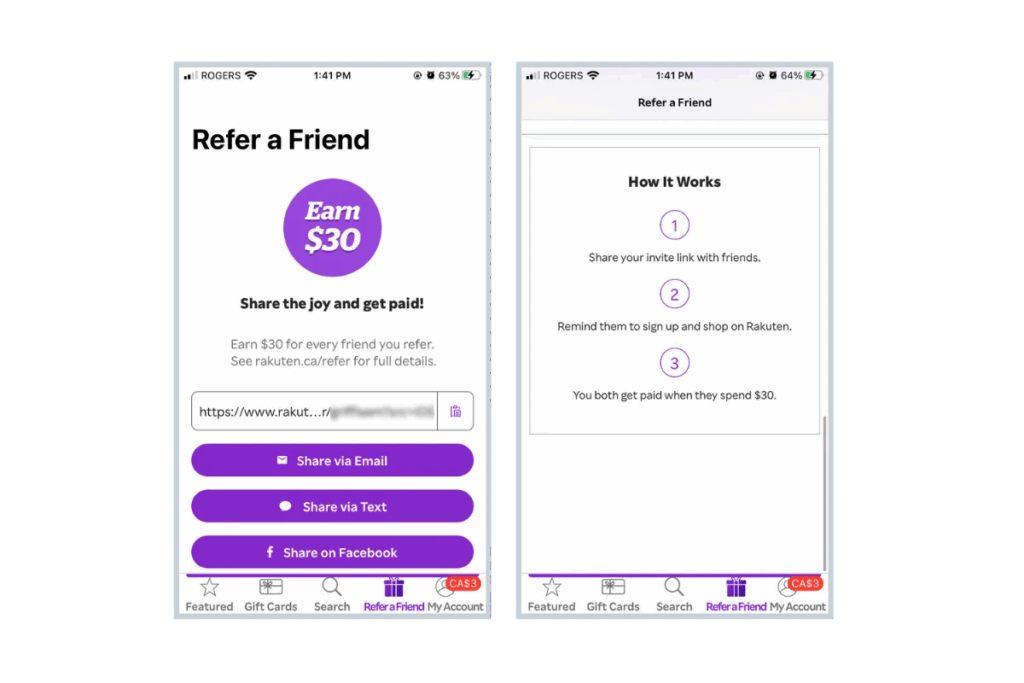
The data is clear: double-sided rewards outperform single-sided programs dramatically, accounting for 91.2% of successful referral programs. When both the referrer and the referred friend receive something valuable, you create what psychologists call reciprocity – the friend feels they’re receiving a genuine gift rather than being sold to, and the referrer doesn’t feel like they’re just shilling for a company.
Sharing mechanics
Users should be able to share their referral link through whatever channel they prefer – text message, email, social media, or simply copying to clipboard. Branch’s research shows that WhatsApp and SMS dominate referral traffic globally, with over 90% of direct message sharing happening through these channels. Making the share process as frictionless as possible directly impacts participation rates.
Clear progress tracking
Users want visibility into their referrals. A dashboard showing pending invitations, successful conversions, and earned rewards keeps participants engaged and motivated to continue sharing. This transparency builds trust and creates a gamification element that drives ongoing participation.
Fraud prevention
Any incentive program attracts bad actors. Robust referral systems include mechanisms to detect and prevent fraudulent activity – multiple accounts from the same device, suspicious patterns of rapid sign-ups, or reward redemption anomalies. Without proper safeguards, abuse can quickly erode program economics.
Reliable attribution technology
The central technical challenge for mobile apps is what’s called the “App Store black box.” When a user clicks a referral link and gets redirected through the App Store to install your app, traditional tracking breaks down. Purpose-built mobile attribution tools using deferred deep linking solve this by connecting the click to the eventual install, ensuring rewards are distributed accurately and building the trust that makes users willing to participate in the first place.
Top 5 app referral program examples
The most successful referral programs share common traits: they’re simple to understand, offer genuinely valuable rewards, and integrate naturally into the user experience. Let’s examine five programs that exemplify these principles.
1. Dropbox
Dropbox’s referral program remains the most studied case in growth marketing history, and for good reason. In just 15 months, the company grew from 100,000 to 4 million registered users, a staggering 3,900% growth rate, with 35% of daily signups coming directly from referrals.
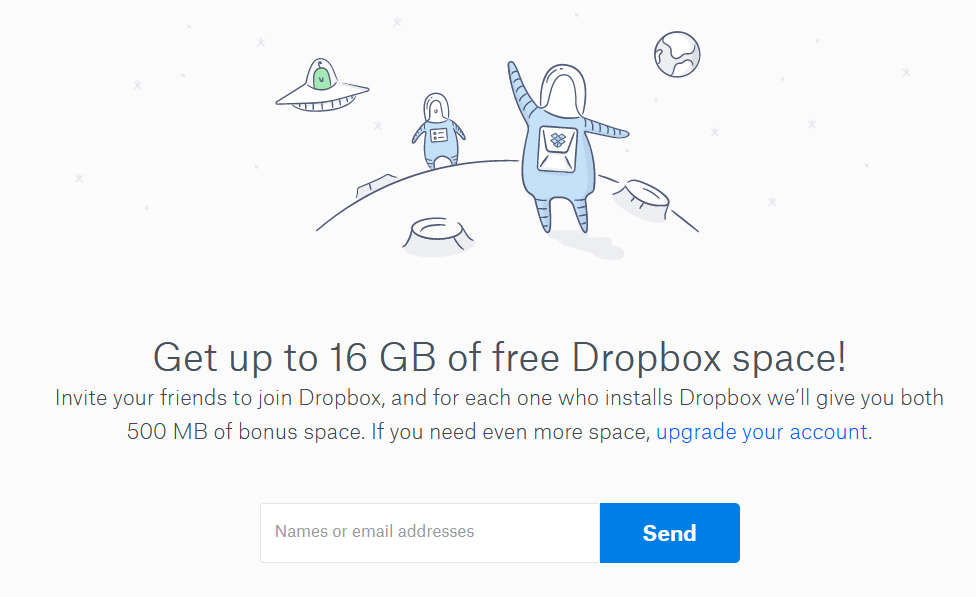
The program worked beautifully because the reward aligned perfectly with the product’s core value. Both the referrer and their friend received 500MB of extra storage space – something every user genuinely wanted. There was no cash to track, no complicated redemption process. The reward simply appeared in your account, making Dropbox more useful with every successful referral.
Dropbox embedded the referral program directly into their onboarding flow, framing it as “Get more space” rather than the generic “Invite your friends.” This subtle reframing emphasized user benefit over company promotion. The sharing process was equally streamlined – users could sync their email contacts or share via social media without leaving the platform.
The genius was in creating a viral loop: users who needed more storage would invite friends, those friends would sign up and eventually need more storage themselves, prompting them to invite their own contacts. By 2010, users were sending 2.8 million invites per month.
2. Uber: mobile-first playbook
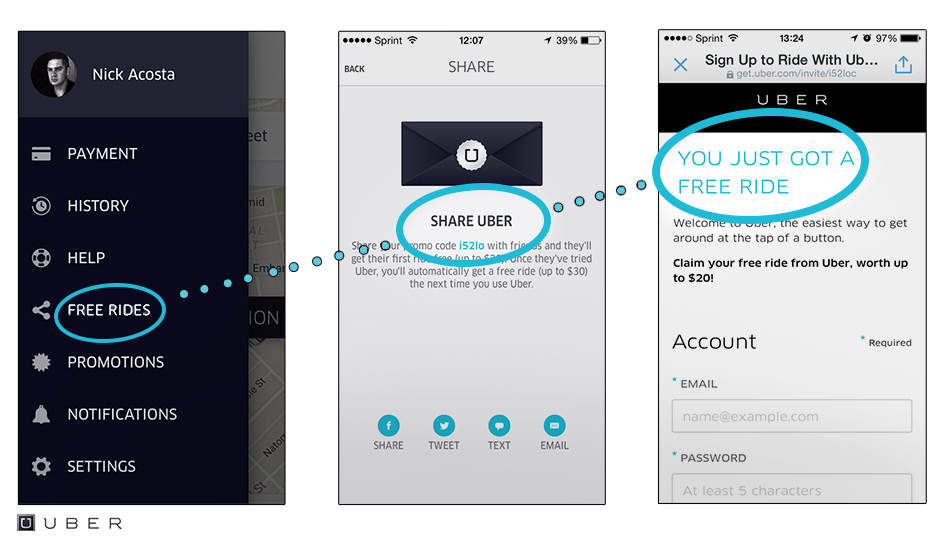
Uber’s referral program demonstrated how to optimize for mobile from the ground up. As an app-only service, every aspect of their referral system was designed for the smartphone experience – sharing a ride credit required just two taps from the main screen.
The double-sided incentive was straightforward: both riders received Uber credits, initially $10 and later increased to $20-30 depending on market conditions. Crucially, Uber framed the call-to-action as “Free Rides” rather than a standard referral prompt, making the value proposition immediately clear.
What set Uber apart was their two-sided marketplace approach. They ran separate referral programs for riders and drivers, understanding that each audience had different motivations. Driver referral bonuses were substantial, up to $500 for referring a driver who signed up with their own vehicle, reflecting the critical importance of supply-side growth.
Uber also pioneered geo-specific referral offers, adjusting incentive levels based on local market conditions and competitive dynamics. This flexibility allowed them to invest more heavily in markets where driver or rider supply was constrained while maintaining profitability in mature markets.
3. Robinhood: pre-launch phenomenon
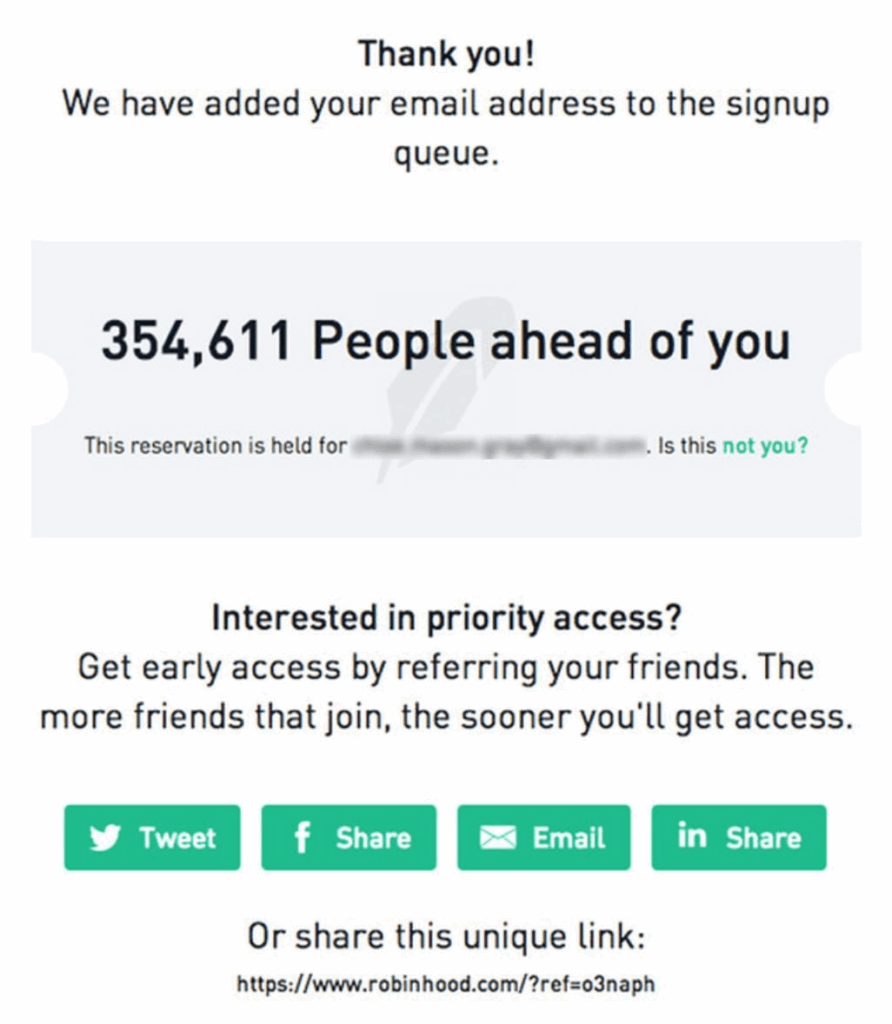
Robinhood achieved something remarkable: they built a waiting list of nearly one million users before their app even launched. Their pre-launch referral program became a masterclass in creating urgency and leveraging FOMO.
The concept was elegantly simple. Users could sign up for early access with just an email address. After signing up, they saw their position on the waitlist – say, number 42,847. Below that position number sat a single, compelling option: share your referral link to move up the list. The more friends who signed up through your link, the closer you got to the front.
This mechanic brilliantly converted a limitation (limited beta access) into an asset. Two-thirds of the million-person waitlist came through referrals. The program created a sense of exclusivity and insider access that money can’t buy.
Post-launch, Robinhood shifted to a gamified referral program offering both users a random free stock. The variable reward element, you might get a $3 stock or you might get Apple, added excitement and shareability that a fixed discount could never match.
4. Cash App: network effects in action
As a mobile-only payment platform, Cash App demonstrates how referrals can be built into the fundamental product experience. The inherent network effects of a payment app – you need other users to send money to – make referrals a natural behavior rather than a marketing add-on.
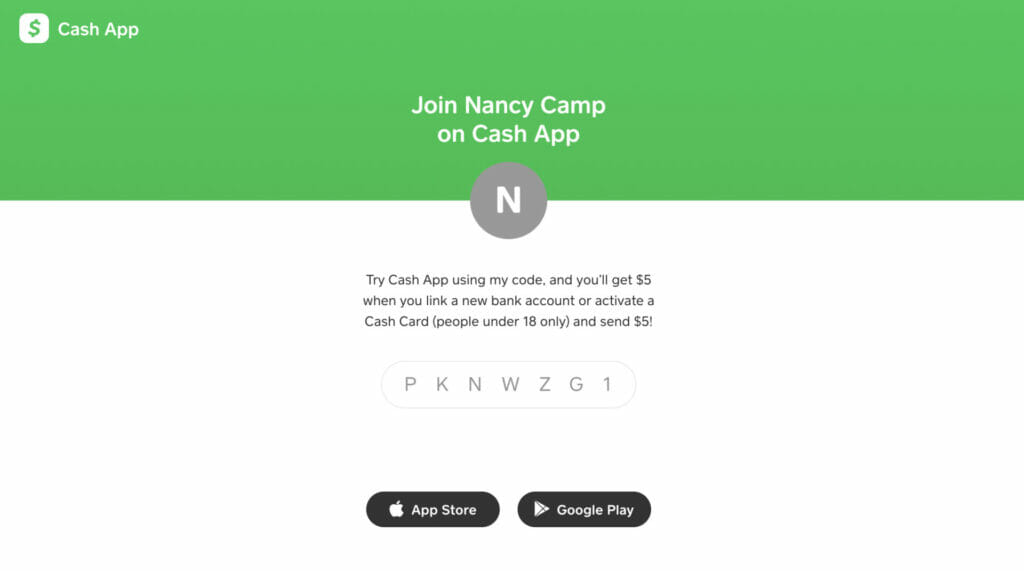
Cash App’s referral program sits front and center, accessible within two taps from the home screen. The reward structure is straightforward: both users receive a cash bonus when the referred friend sends their first payment. Because the incentive is actual money, not credits or points, the value proposition requires no explanation.
What makes Cash App’s approach particularly effective is how it compounds with product usage. Every time you want to pay someone who doesn’t have the Cash App, you have a natural opportunity (and incentive) to refer them. The referral isn’t a separate marketing activity – it’s woven into the core use case.
5. Rappi: scaling through influencer integration
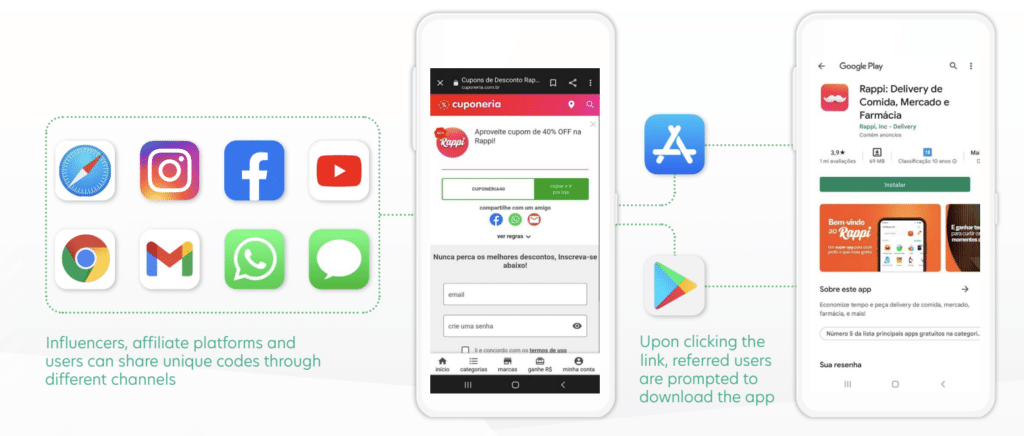
The Colombian super-app Rappi offers a compelling example of combining traditional referral mechanics with influencer marketing at scale. With over 50 million total app installs, Rappi has achieved something remarkable: an average of 50% of new users in new city launches come from influencer and referral campaigns.
Their approach recognizes that referrals and influencer marketing are fundamentally the same mechanic operating at different scales. The program starts with influencers and affiliates sharing unique codes through various mobile channels. When users install the app and log in – easily accomplished through social account integration – the coupon automatically applies to their first purchase.
Rappi’s success stems from investing in behavior that was already happening organically. Users were naturally recommending products and services they liked; Rappi simply created the infrastructure and incentives to amplify and track those recommendations. This recognition that a referral program should formalize existing word-of-mouth rather than create artificial sharing behavior is a key insight many apps overlook.
How to create a mobile app referral program
Building an effective referral program requires careful planning across multiple dimensions. Here’s a step-by-step approach to getting it right.
Step 1: Define your goals and success metrics
Before writing a single line of code, clarify what success looks like. Are you optimizing for raw user growth, paid conversions, or retention? Your goals will shape every subsequent decision, from reward structure to triggering events.
Establish baseline metrics now so you can measure improvement. Key numbers to track include current organic referral rate (how many users already recommend your app without incentives), customer acquisition cost from other channels, and lifetime value of your average user. These figures will help you design a program that’s both attractive to users and sustainable for your business.
Step 2: Design your reward structure
The reward is the fuel for your referral engine. It should be valuable enough to motivate action while remaining economically sustainable. Consider these common reward types:
- Cash or gift cards: Highly motivating and universally understood. Best for apps where monetary value is clear, like fintech or e-commerce.
- App credits: Excellent for driving engagement and retention. The value stays within your ecosystem – think Uber ride credits or Airbnb travel credits.
- Premium features: Cost-effective with high perceived value. Offering a free month of subscription or unlocking premium features has near-zero marginal cost to you.
- Product-aligned benefits: Like Dropbox’s extra storage, rewards that enhance the core product experience often outperform generic incentives.
For subscription apps dealing with Apple’s platform restrictions, Adapty and similar tools offer options like promotional entitlements, subscription extension APIs, and offer codes. Each has trade-offs in flexibility and auto-renewal behavior, so evaluate which best fits your user experience.
| Reward type | Best for | Pros | Cons | Example |
|---|---|---|---|---|
| Cash / Gift cards | Fintech, e-commerce | Universally motivating, clear value | Higher cost, doesn’t drive engagement | Cash App: $5-$15 cash |
| App credits | Ride-sharing, delivery, travel | Keeps users in ecosystem, drives usage | Only valuable if user needs more | Uber: ride credits |
| Premium features | Subscription apps | Near-zero marginal cost, high perceived value | Limited appeal if free tier is weak | 1 month free premium |
| Product-aligned benefits | Storage, utility apps | Enhances core experience, creates viral loop | Must align with product value | Dropbox: 500MB storage |
| Variable rewards | Fintech, gaming | Excitement, shareability | Unpredictable costs, may disappoint | Robinhood: random free stock |
Step 3: Choose your trigger event
When does the referrer get rewarded? This decision significantly impacts both program economics and fraud prevention. Common trigger events include:
- App install
- Account creation
- First purchase or transaction
- Subscription start
- Completing a specific action (first ride, first order, etc.)
“Pick a conversion event that is far enough down your acquisition funnel that it’s too much pain to do repeatedly,” advises Branch’s Alex Bauer.
A trigger that’s too easy (just install) invites gaming; one that’s too difficult (purchase after 30 days) kills motivation. Find the balance that validates genuine user interest while protecting your program from abuse.
Step 4: Build the technical infrastructure
The technical foundation of your referral program determines whether it’s reliable and trustworthy or a source of user frustration. Key components include:
- Link generation: Create unique, trackable links for each user. These should work across all sharing contexts – SMS, email, social media – and maintain attribution through the App Store install flow.
- Deferred deep linking: This technology bridges the gap when users don’t have your app installed. It remembers the referral context through install, delivering the referred user to the right place with proper attribution intact.
- Server-side tracking: Record referral relationships, track trigger events, and manage reward distribution. This typically requires database tables linking referrers to referred users and tracking reward status.
- Fraud detection: Implement checks for suspicious patterns – multiple accounts from the same IP, device ID reuse, rapid sign-up sequences – to protect program integrity.
You can build this infrastructure in-house or leverage specialized platforms like Branch, Tapp, or other referral marketing software that handles the complex mobile attribution challenges for you.
Step 5: Design the user experience
The best referral programs feel natural rather than promotional. Key UX considerations include:
Placement: Make the program easily discoverable without being intrusive. A dedicated menu item works, but also consider prompting after positive moments – a completed workout, a savings milestone, a successful delivery.
Messaging: Frame the offer around user benefit. “Get a free month” resonates more than “Refer a friend.” The most effective programs (Dropbox, Uber, Robinhood) all lead with what the user gains.
Sharing options: Provide multiple channels – SMS, email, social media, copy to clipboard. Remember that direct messaging dominates referral traffic, so optimize those paths first.
Progress visibility: Show users their referral status – pending invites, successful conversions, earned rewards. This transparency builds trust and maintains engagement.
Step 6: Launch and iterate
Start with a minimum viable program and refine based on data. Your initial assumptions about reward amounts, trigger events, and user behavior will likely need adjustment. Plan for A/B testing different variations:
- Different reward amounts or types
- Various trigger events
- Alternative messaging and framing
- Different placement and timing of prompts
Monitor both participation metrics (share rate, invitation click-through rate) and outcome metrics (conversion rate, cost per referred customer) to identify optimization opportunities.
How to measure your referral program
Without tracking the right metrics, you’re flying blind. Here are the key performance indicators that reveal whether your program is working.
K-Factor
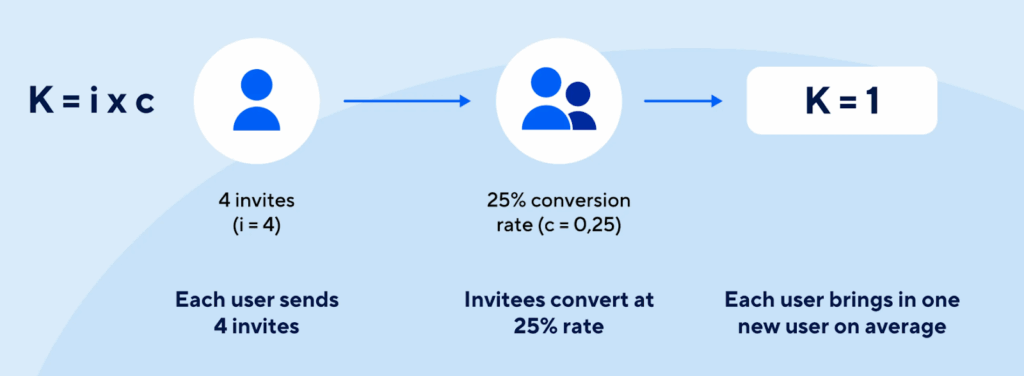
The holy grail of referral metrics. K-Factor measures how many new users each existing user brings in, calculated as: (average invitations sent per user) × (conversion rate of those invitations). A K-Factor above 1.0 means exponential growth—each user generates more than one new user. Even values below 1.0 contribute meaningful organic growth on top of your other acquisition efforts. For consumer products, a sustainable K-Factor of 0.15-0.25 is good, 0.4 is great, and 0.7 is outstanding.
| K-Factor range | Growth impact | Benchmark level |
|---|---|---|
| > 1.0 | Exponential (viral) growth | Exceptional (rare) |
| 0.7 – 1.0 | Strong organic growth | Outstanding |
| 0.4 – 0.7 | Significant organic contribution | Great |
| 0.15 – 0.4 | Meaningful supplement to paid | Good |
| < 0.15 | Minimal impact | Needs optimization |
Participation rate
What percentage of eligible users actually participate in your referral program? Low participation suggests issues with program visibility, reward attractiveness, or user satisfaction with your core product. This metric helps you understand how much room exists to grow the program.
Share rate
Among users who engage with the referral program, how many actually complete a share? Drop-offs here indicate friction in your sharing UX or concerns about what getting shared (the message, the landing page experience).
Invitation click-through rate
When someone receives a referral invitation, how often do they click? This metric reflects the effectiveness of your referral message and the perceived value of your offer to new users.
Referral conversion rate
Of those who click a referral link, how many complete the desired action (install, sign-up, purchase)? This reveals how compelling your onboarding experience is for referred users and whether your reward structure provides sufficient motivation.
Cost per referred customer
Total program costs (rewards, platform fees, promotional spend) divided by new customers acquired. Compare this to your cost per acquisition from other channels – referral CAC should be significantly lower to justify the investment.
Referred user lifetime value
Do users acquired through referrals generate more long-term value than those from other channels? Track retention, engagement, and revenue metrics separately for referred users. Higher LTV justifies more aggressive referral rewards.
Viral cycle time
How long does it take from a user joining to their first successful referral? Shorter cycle times compound growth faster. Identify and remove friction that delays users from making their first share.
Referral program metrics dashboard
| Metric | What it measures | Formula | Target benchmark |
|---|---|---|---|
| K-Factor | Viral coefficient | Invites per user × Conversion rate | > 0.4 |
| Participation rate | % of users who share | Sharers ÷ Total eligible users | 10-30% |
| Share rate | % who complete sharing | Completed shares ÷ Program visitors | > 50% |
| Click-through rate | Invite effectiveness | Clicks ÷ Invites sent | 20-40% |
| Referral conversion | New user acquisition | Conversions ÷ Clicks | 10-25% |
| Cost per referred user | Program efficiency | Total costs ÷ Referred users | < Paid CAC |
| Referred user LTV | Quality of referrals | Revenue from referred users | > Average LTV |
Best practices for your app referral program
Beyond the fundamentals, these principles separate exceptional referral programs from mediocre ones.
Embed referrals into the product experience
The most effective referral programs aren’t bolt-on marketing campaigns – they’re integral to the product itself. “The problem is not building the referral program into the product experience,” notes Branch’s Alex Bauer. Programs like Dropbox, Uber, and Robinhood succeed because “they bake into the product experience in so many places and so tightly that there’s no way a user doesn’t know it’s an option.”
Look for natural integration points: onboarding flows, moments of accomplishment, and situations where users already want to share. A fitness app might prompt referrals after a user hits a personal record; a finance app after successfully saving toward a goal.
Align rewards with product value
Dropbox didn’t offer cash – they offered storage space, the very thing users came for. Uber offered ride credits, not Amazon gift cards. When rewards enhance the core product experience, they create stronger engagement loops and feel less transactional.
Consider what your users actually want more of within your app. More storage? Extended premium access? In-app currency? Exclusive features? These product-aligned rewards often have higher perceived value than their actual cost and keep users engaged with your platform.
Time your prompts strategically
Don’t ask for referrals before users have experienced value. The best time to prompt for a share is at a “moment of delight” – after users have accomplished something meaningful or experienced a clear benefit from your app. They’re emotionally primed to share positive experiences.
Also consider moments of natural friction. When a user hits a storage limit (like Dropbox), they’re motivated to earn more space. When they want to split a check with a friend who doesn’t have the app, they have a genuine reason to send an invitation.
Make sharing easy
Every tap, every extra screen, every moment of confusion costs you referrals. Aim for two-tap sharing: one tap to access the referral program, one tap to share. Pre-populate sharing messages (while allowing customization), and support the channels your users actually use – primarily direct messaging.
Test your referral flow regularly. Go through the entire journey as both a referrer and a referred user. Note any friction points, confusing messages, or broken paths, then fix them relentlessly.
Build trust through transparency
Users should always know where they stand. Show pending referrals, successful conversions, and reward status clearly. If there are conditions for earning rewards, state them upfront. If rewards take time to process, set expectations.
Nothing kills a referral program faster than users who feel cheated. If they refer friends and don’t see rewards they expected, they won’t just stop participating – they’ll actively warn others. Reliable attribution and prompt reward delivery are essential.
Protect against fraud without punishing legitimate users
Fraud prevention is necessary, but overzealous restrictions create false positives that frustrate genuine users. Strike a balance: implement detection for obvious abuse patterns while giving legitimate users the benefit of the doubt.
Common fraud prevention techniques include device fingerprinting, IP analysis, velocity checks on sign-ups, and requiring meaningful trigger events (not just install) for reward eligibility. But always have a support path for users who get incorrectly flagged.
Test and optimize continuously
A referral program isn’t a set-it-and-forget-it feature. The best programs evolve based on data. Run A/B tests on reward amounts, messaging, placement, and timing. Track how changes affect your key metrics.
Be patient – referral programs often take time to build momentum. But also be willing to make significant changes if early results are poor. Sometimes a modest reward increase or messaging tweak can dramatically improve participation.
Final thoughts
Building a successful referral program isn’t about copying Dropbox or Uber – it’s about understanding the principles that made those programs work and adapting them to your unique product, users, and market position. The most effective programs align rewards with product value, integrate naturally into the user experience, and build trust through reliable tracking and transparent communication.
Remember that a referral program amplifies your existing user satisfaction. If your product doesn’t deliver genuine value, no amount of reward engineering will generate sustainable referral growth. But if you’ve built something users truly love, a well-designed referral program can transform that satisfaction into your most powerful growth engine – one recommendation at a time.
Start simple. Measure everything. Iterate relentlessly. The best referral programs aren’t born perfect – they’re refined through continuous learning and optimization. Your users are already talking about your app. Give them the tools and incentives to turn those conversations into growth.