Having a lot of downloads doesn’t mean as much as it used to. With over 299 billion app downloads projected globally and the average smartphone user having 80 apps installed, competition for attention has never been fiercer. But here’s the catch — users actively use only about 9 apps per day and 30 per month. Your app could easily end up being an untouched icon on someone’s home screen.
In 2026, the smartest app developers aren’t chasing downloads — they’re obsessing over engagement. And with 88% of mobile time now spent inside apps rather than browsers, the opportunity is massive for those who get it right.
So let’s talk app engagement: what it actually means, why the data says you should care, how to get your engagement metrics up, and how to measure success. Let’s dive in.
Key takeaways:
- The average app loses 72% of users within the first 3 days — engagement strategy is the antidote
- AI-powered personalization can boost engagement by 2.5x and retention by up to 30%
- Apps with gamified UX retain 23% more users than non-gamified ones
- Omnichannel messaging (4+ channels) drives 6.5x more purchases
- Global Day 30 retention sits at just ~5% — there’s huge room for improvement
What is app engagement?
App engagement refers to the depth and quality of interaction a user has with a mobile app over a specific period. It’s one of the most important metrics for assessing an application’s real-world success — far more telling than raw download counts.
App engagement goes beyond increasing app downloads and installations, focusing on how deeply users interact with your product and how much value they extract from it. Think of it this way: downloads tell you who showed up, but engagement tells you who stayed.
Several key aspects drive app engagement:
- Time spent in the app: The more time users actively invest, the higher the engagement. The average person spends about 2 hours and 51 minutes per day on mobile apps, with social media, communication, and gaming leading the categories.
- Frequency of use: How often users open and interact with the app. Apps used daily demonstrate significantly stronger engagement than those opened weekly or monthly.
- Feature interaction: Active engagement means more than just opening the app — it includes exploring features, completing actions, and reaching “aha moments” that deliver clear value.
- User feedback and ratings: Reviews, ratings, and feedback are indirect but powerful engagement indicators. Positive feedback correlates with higher engagement and provides social proof for new users.
- Social sharing and referrals: Users sharing content or recommending the app to others contribute to both increased engagement and organic user acquisition.
Why is increasing app engagement important?
High app engagement is one of the top goals for any app developer at launch — and for good reason. The data backs it up. Here are 5 reasons why focusing on engagement matters now more than ever:
1. Improves user retention
High app engagement is directly linked to improved user retention. According to 2025 industry data, the average app loses approximately 72% of its users within the first 3 days of download. The global average Day 1 retention rate sits at just ~25%, dropping to ~10.7% by Day 7 and a mere ~5% by Day 30.
When users regularly interact with and find value in an app, they are far more likely to continue using it long-term. This sustained engagement builds a loyal user base, reduces churn rates, and keeps your app relevant in a fiercely competitive market. In fact, top-performing apps that prioritize engagement can achieve Day 30 retention rates of 35%+ in the best categories — compared to the 5% industry average.
2. Enhances revenue potential
Engagement and revenue are inseparable. Engaged users are more likely to make in-app purchases, subscribe to premium features, or interact with advertisements. According to McKinsey, companies that excel at personalization — a core engagement strategy — generate 40% more revenue from those efforts compared to average players.
Global app marketing spend on user acquisition reached $78 billion in 2025, growing 13% year-over-year. But here’s the strategic shift: remarketing spend grew even faster at 37% YoY, reaching $31.3 billion. The industry is clearly recognizing that re-engaging existing users delivers better economics than constantly acquiring new ones.
3. Elevates user satisfaction
When users have a positive, fulfilling experience with an app, their satisfaction increases — and this creates a compounding effect. Satisfied users rate and review positively, leading to higher app store ratings. Your app develops a positive reputation, encouraging user loyalty and word-of-mouth referrals.
Data shows that 62% of consumers report losing loyalty to a brand if it doesn’t provide a personalized experience. On the flip side, 80% of consumers are more likely to purchase from companies offering tailored experiences. Satisfaction isn’t just a feel-good metric — it’s a business driver.
4. Serves as a key indicator of app health
App engagement is a critical barometer of an app’s overall health and success. Monitoring engagement metrics provides valuable insights into how users interact with different features, helping you identify friction points and areas for improvement.
By understanding user behavior through analytics, you can make data-driven decisions, implement targeted updates, and ensure your app remains competitive and adaptive to evolving user preferences. Declining session frequency or duration often signals problems before they become full-blown churn — giving you time to intervene.
5. Has a positive impact on organic growth
High app engagement creates a ripple effect on organic growth. Engaged users are significantly more likely to share positive experiences with others, driving word-of-mouth recommendations that no ad budget can buy.
This organic growth can significantly expand your app’s user base without relying solely on paid marketing. Given that user acquisition costs continue rising across both platforms, building organic growth through engagement is one of the most sustainable strategies available.
How to develop a mobile app engagement strategy?
Not sure where to start with your engagement strategy? There are 4 foundational steps you need to take before diving into specific tactics.
1. Understanding the target audience
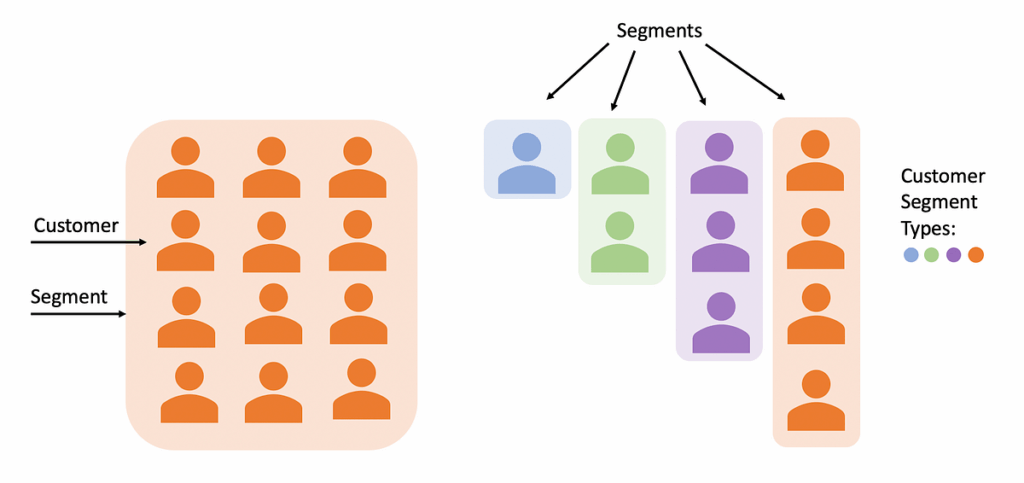
Start by understanding your target audience in depth. You can’t build engagement for people you don’t understand. Conduct thorough research to identify the demographics, preferences, behaviors, and pain points of your potential users.
According to Sensor Tower’s 2025 data, app usage patterns differ significantly across age groups: young adults aged 18–24 spend the most time on mobile apps (averaging 112.6 hours per month), while users aged 25–34 follow at 102.4 hours, and the 35–44 group averages 93.6 hours. Each demographic has different expectations, preferred features, and engagement patterns.
For example, if your app targets young professionals, your engagement strategy might prioritize sleek design, time-saving features, and social integrations that align with their busy, connected lifestyles. If your audience is children aged 7–13, bold colors, exciting UI, and gamification elements will be more effective.
2. Setting clear objectives
Define specific and measurable engagement goals. This involves not only attracting new users but also retaining and re-engaging existing ones. Some common objectives include increasing DAU/MAU ratios, improving session duration, boosting in-app purchases, or reducing Day 7 churn.
Having well-defined goals ensures your engagement efforts align with the overarching success of your app. For instance, if your goal is to increase subscription conversions, your strategy should focus on demonstrating premium value before the paywall and A/B testing different paywall designs.
3. Strong and aligned marketing strategy
Successful apps with high engagement share one thing: an excellently targeted marketing strategy that extends beyond launch. Implement a mobile app campaign strategy combined with PR efforts aligned with platforms where your users actually spend time.
Utilize app store optimization (ASO) techniques to enhance visibility. Additionally, build a remarketing strategy — not just a launch campaign. The data is clear: remarketing’s share of total app marketing spend rose from 25% in 2024 to 29% in 2025, reflecting the industry-wide shift toward re-engagement over pure acquisition.
4. Incorporating feedback loops
You can’t refine your engagement strategy without actively listening. Encourage users to provide feedback within the app through surveys, in-app prompts, reviews, or direct communication channels.
Apps that implement in-app surveys and feedback loops show 11% better week-one retention. Use this feedback to address pain points, refine features, and enhance the overall experience. A continuous feedback loop ensures your app stays responsive to real user needs — not just your assumptions about what they want.
App retention rate benchmarks by category (2025–2026)
Before diving into strategies, it helps to know where the benchmarks stand. Here’s how retention rates break down across major app categories:
| App category | Day 1 | Day 7 | Day 30 |
|---|---|---|---|
| News | ~35% (iOS) | ~18% | ~13.3% |
| Finance / Banking | ~30.3% | ~16% | ~11.6% |
| Marketplace / Shopping | ~33.7% | ~16.1% | ~8.7% |
| Gaming | ~28–32% | ~12% | ~2.3–5.4% |
| Health and fitness | ~20% | ~10% | ~4% |
| Social | ~26.3% | ~12% | ~3.9% |
| Education | ~22% | ~9% | ~2.1% |
| Dating | ~20% | ~8% | ~2–2.7% |
| Global average | ~25% | ~10.7% | ~5% |
Sources: Pushwoosh Benchmarks Study 2025, AppsFlyer Retention Report 2025, Amra & Elma, Business of Apps
iOS apps generally retain users slightly better than Android across most categories:
| Platform | Day 1 | Day 7 | Day 30 |
|---|---|---|---|
| iOS | 23.9% | 6.89% | 3.10% |
| Android | 21.1% | 5.15% | 2.82% |
These numbers provide your baseline. Now let’s look at the strategies that can push your app above these averages.
15 strategies to increase app engagement
The following strategies aren’t theoretical — they’re backed by data and proven by real apps. Some are foundational, others are emerging in 2026, but all of them are worth implementing if you’re serious about engagement.
1. Leverage AI-powered personalization
This is the single biggest engagement lever available in 2026 — and if you’re not using it yet, you’re behind. AI-driven personalization goes far beyond displaying a user’s name on the home screen. It means dynamically adapting content, recommendations, UI layouts, and notifications based on individual user behavior in real time.
The numbers speak clearly: 92% of companies now use AI-driven personalization to drive growth. Apps leveraging AI for personalization see 2.5x higher engagement rates. And according to research, true 1:1 personalization can lift retention rates by up to 45%.
Spotify is the gold standard here. Its Discover Weekly playlists, personalized home screens, and the wildly viral Spotify Wrapped campaign all demonstrate how AI-powered personalization creates engagement moments that users actively look forward to. Calm uses similar AI to suggest personalized meditation sessions based on user mood and history.
For subscription apps, AI personalization directly impacts conversion. Tools like Adapty’s targeting and segmentation features allow you to show different paywalls to different user segments based on their behavior — dramatically improving both engagement and monetization.
2. Optimize app onboarding
The initial onboarding experience can make or break your engagement trajectory. Data from UXCam shows that apps activating users within the first 3 minutes see nearly 2x higher retention rates. Meanwhile, apps with personalized onboarding flows have a 22% lower churn rate compared to those with generic onboarding.
A well-designed onboarding process does three things: demonstrates value immediately, educates users about key features, and gets them to their first “aha moment” as fast as possible. The goal is time-to-value — the less time between download and realized value, the better.
The fitness app MyFitnessPal effectively uses onboarding by guiding users to set fitness goals and providing a quick tutorial on meal tracking, ensuring users see the app’s core value within their first session. Notion takes a different approach — it opens with a blank page, signaling simplicity and inviting immediate creation. Both work because they match onboarding to user expectations.
3. Implement push notifications wisely
Push notifications remain one of the most effective re-engagement tools — but only when done right. Data shows that personalized push notifications increase app engagement by 30–60%, and can boost Day 7 retention by up to 14%. Brands using 4+ messaging channels (in-app, push, email, and web) together see 6.5x more purchases compared to single-channel approaches.
The key is relevance, timing, and restraint. Push notifications work best when they’re personalized to user behavior, sent at optimal times (AI can help determine these), and provide genuine value rather than generic reminders.
For example, a language learning app sending a “Your daily streak is about to expire!” notification at the right time drives immediate action. A shopping app notifying about a price drop on a wishlisted item feels helpful, not intrusive. A generic “We miss you!” notification to every inactive user? That gets your app muted — or uninstalled.
4. Offer incentives and rewards
Reward programs tap into fundamental psychology: the desire for accomplishment and progression. When users receive rewards for completing actions — whether it’s finishing a level, maintaining a streak, or making a purchase — they develop stronger connections with the app and return more frequently.
The key is matching incentives to your audience. A meditation app might offer a new guided session after a 7-day streak. A shopping app might unlock free shipping after a certain number of purchases. A fitness app might award badges for personal records. Tailoring rewards to what your specific users value ensures they resonate and drive continued engagement.

5. Optimize app performance
A fast, smooth, and reliable experience is non-negotiable. A 1-second delay in load time can reduce conversions by 7%. Users expect apps to load within 2 seconds, and frequent crashes cause 71% of users to uninstall. No engagement strategy compensates for a buggy, slow app.
Regularly optimize load times, fix bugs promptly, and ship performance updates alongside feature updates. Monitor crash rates and ANR (Application Not Responding) rates closely — these are silent engagement killers that users won’t complain about because they’ll simply leave.
6. Leverage in-app messaging
In-app messaging serves as a direct communication channel to guide, inform, and engage users while they’re actively using your app — making it one of the highest-converting touchpoints available.
Use in-app messages for feature announcements, personalized tips, contextual onboarding for advanced features, or targeted upgrade prompts. The key advantage over push notifications is context: you know exactly what the user is doing when you show the message, which allows for much more relevant messaging.
For subscription apps, in-app messages are particularly powerful for surfacing premium features at the exact moment a user hits a free-tier limitation — a natural and non-intrusive conversion trigger.
7. Utilize gamification techniques
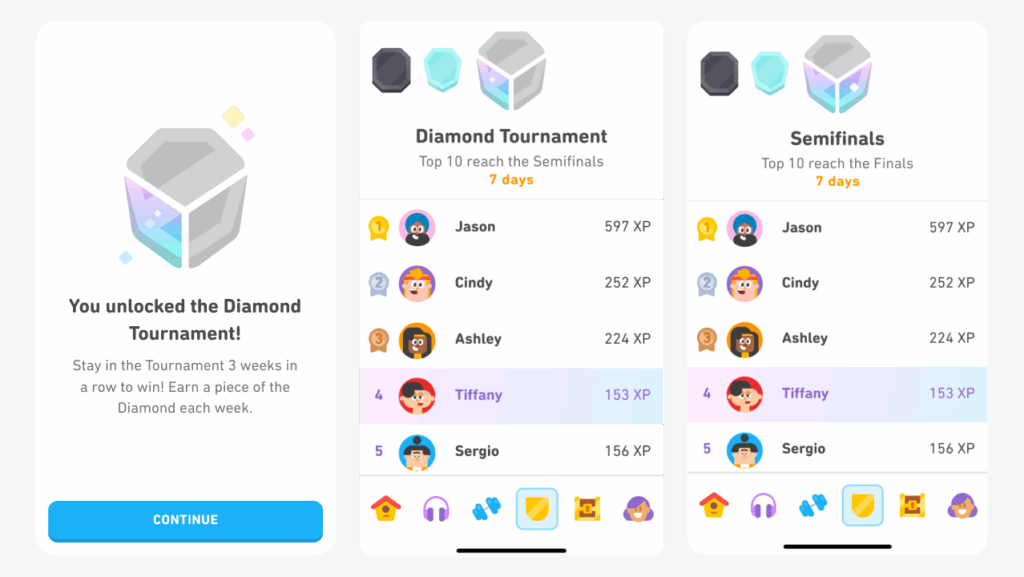
There’s perhaps no better example of gamification than Duolingo, and the data backs up why. Apps with gamified UX features retain 23% more active users than non-gamified counterparts, and gamification can increase DAU by 2.6x.
From daily challenges and gem rewards to streak counters and global leaderboards, Duolingo transformed something as demanding as language learning into a competitive, fun, and rewarding game. The famous Duo owl reminders have even become a cultural meme — which is itself a form of engagement and organic marketing.
Gamification works because it creates habit loops: trigger (notification), action (complete lesson), reward (XP and streak), and investment (progress you don’t want to lose). These psychological loops are what drive users to open your app every single day.
Other strong examples include Strava’s segment leaderboards, Headspace’s mindfulness streaks, and Nike Run Club’s achievement badges. The common thread? Making progress visible and rewarding.
8. Regularly update content
Keeping app content fresh is vital for sustaining user interest over time. Regular updates — new features, seasonal content, fresh challenges, updated UI elements — give users concrete reasons to revisit.
This is especially critical after the Day 7 retention cliff. Users who’ve made it past the first week need a steady stream of new value to prevent them from drifting away. Content calendars aren’t just for social media — your app needs one too.
Spotify’s annual Wrapped campaign is a masterclass in content-driven engagement: it creates a massive annual engagement spike by turning user data into shareable, personalized content. Even if you can’t replicate that scale, the principle applies — give users something new and interesting to come back for.
9. Encourage social sharing
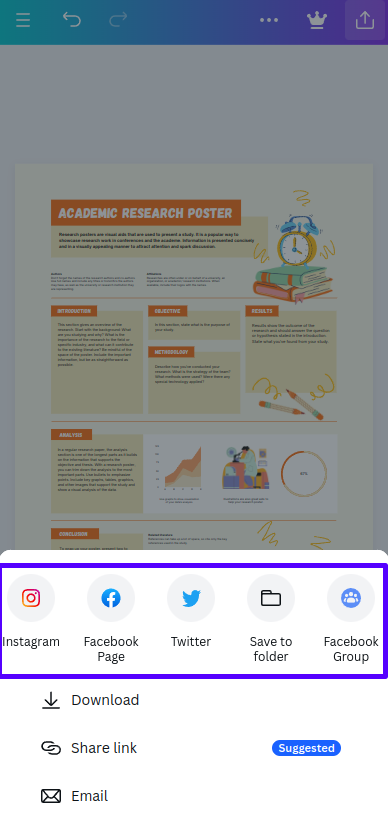
Integrated social sharing features appear on almost every major app — from Instagram and Canva to Google Maps and Strava. Social sharing serves a dual purpose: it increases engagement for the user doing the sharing (creating a sense of achievement and social validation) and drives organic discovery from their network.
Encouraging users to share content, achievements, or results directly increases app visibility and creates social proof. Strava does this brilliantly — every shared run or ride becomes both a personal accomplishment and a subtle advertisement for the app.
The best social sharing implementations make sharing effortless and visually appealing. Think auto-generated shareable cards with the user’s stats, achievements, or results that look polished on Instagram Stories or X. Your users become your marketing team — for free.
10. Focus on customer support and feedback
Listening to users and providing responsive customer support directly impacts satisfaction and loyalty. When users see that developers actively address their feedback, it builds trust and commitment.
Apps that implement in-app surveys and feedback loops show 11% better week-one retention. Beyond the retention impact, feedback data is invaluable for prioritizing your product roadmap. Instead of guessing what to build next, let your users tell you what they need most.
Positive support interactions also reduce churn during frustration moments — the points where a user would otherwise uninstall. A quick, helpful response to a bug report can turn a frustrated user into a loyal advocate.
11. Create a community around the app
Community building is often underestimated, but it’s one of the most powerful long-term engagement drivers. Strava has grown to over 120 million users, largely because of its community features that let users share workouts, join challenges, and connect with fellow fitness enthusiasts.
A strong community creates social accountability and belonging — forces that keep users coming back even when their individual motivation dips. Beginners join to learn and share milestones; experienced users return to help others and maintain their status. Everyone finds the app engaging for different reasons — and that’s the point.
Reddit, Discord, and even in-app community features can serve this purpose. The key is creating spaces where users can interact with each other, not just with your app. When users form relationships through your platform, switching costs become much higher.
12. Integrate analytics to understand users
Any engagement strategy without analytics is guesswork. Implementing analytics tools is essential for understanding user behavior patterns, identifying friction points, and measuring the real impact of your engagement initiatives.
Track cohorts, not just aggregates. Understand where users drop off in your funnel. Identify which features correlate with long-term retention and which ones users ignore. Use Adapty’s revenue and LTV analytics to connect engagement patterns directly to revenue outcomes.
The best apps aren’t just data-informed — they’re data-obsessed. They run continuous experiments, measure everything, and iterate fast based on what the numbers say.
13. Implement deep linking for re-engagement
Deep linking is a technical strategy with massive engagement implications. Instead of sending users to your app’s home screen (where they have to navigate to the relevant content), deep links take them directly to the specific screen, content, or offer that prompted the interaction.
This matters enormously for re-engagement campaigns. When you send a push notification about a new feature, a deep link that opens that exact feature screen eliminates friction. When a user clicks on a remarketing ad, landing on the relevant paywall rather than the home screen dramatically improves conversion.
Deep linking is especially critical for subscription apps. A well-crafted re-engagement email with a deep link to a personalized offer page — built using tools like Adapty’s paywall builder — creates a seamless path from notification to conversion.
14. Optimize subscription paywalls with A/B testing
For subscription-based apps, the paywall is arguably the most important engagement and monetization touchpoint. How you present your subscription offer — the design, copy, pricing, trial length, placement, and timing — directly impacts both conversion rates and perceived app value.
A/B testing different paywall variations is essential. Test soft paywalls vs. hard paywalls. Test different price points, trial durations, and feature messaging. Test placement — showing the paywall after onboarding vs. after the user hits a free-tier limit. Even small changes can yield significant improvements in conversion.
Adapty’s paywall A/B testing and Autopilot features make this process straightforward: you can create and test multiple paywall variations without code changes, targeting different user segments with different offers based on their behavior and engagement level.
15. Build an omnichannel engagement strategy
The most successful apps in 2026 don’t rely on a single engagement channel. They orchestrate a coordinated strategy across push notifications, in-app messaging, email, and web push — creating a consistent experience no matter where the user interacts.
The data is compelling: brands using 4+ messaging channels see 6.5x more purchases and 126x higher session rates compared to single-channel approaches. Omnichannel isn’t a luxury — it’s table stakes for serious engagement.
The key is coordination, not duplication. Each channel serves a different purpose: push notifications for time-sensitive re-engagement, in-app messaging for contextual guidance, email for longer-form content and win-back campaigns, and web push for cross-platform continuity. When all four work together with shared user intelligence, the engagement impact compounds dramatically.
Engagement strategy impact: what to expect
Here’s a quick reference showing what each strategy can deliver based on current industry data:
| Strategy | Expected impact | Key metric affected |
|---|---|---|
| AI-powered personalization | +30% retention, 2.5x engagement | DAU/MAU, session length |
| Optimized onboarding | -22% churn rate, 2x retention if activated in 3 min | Day 1 retention, activation |
| Personalized push notifications | +14% Day 7 retention, 30–60% more engagement | Retention, re-engagement |
| Gamification | +23% user retention, 2.6x DAU | DAU, session frequency |
| Omnichannel messaging (4+ channels) | 6.5x more purchases, 126x sessions | Conversion, LTV |
| Deep linking | Reduced friction, higher conversion from re-engagement | CTR, conversion rate |
| In-app feedback loops | +11% week-one retention | Day 7 retention |
| Paywall A/B testing | Variable — often +15–30% conversion improvement | Conversion rate, revenue |
| Community building | Higher organic growth, increased session frequency | MAU, referral rate |
| Content updates | Sustained user interest, reduced Day 30 churn | Return visits, MAU |
Sources: Pushwoosh, AppsFlyer, SQ Magazine, UXCam, Braze, McKinsey (2025)
How to measure app engagement
App engagement might sound like a qualitative concept, but it absolutely can — and should — be measured quantitatively. Here are the 5 key metrics you should track, along with benchmarks and optimization tips.
Daily/monthly active users (DAU/MAU)
DAU and MAU are foundational metrics that tell you how many unique users engage with your app daily and monthly. But the real power metric is the DAU/MAU ratio — also known as the “stickiness ratio.” This tells you what percentage of your monthly users are active on any given day.
A DAU/MAU ratio of 20%+ is considered healthy, and 25%+ is strong. For context, social media apps typically achieve the highest stickiness ratios, while utility apps tend to be lower but that’s by design.
To improve stickiness, focus on building habit-forming features — daily content updates, streak systems, personalized recommendations, and timely push notifications that give users a reason to open the app every day.
User retention rate
Retention rate is expressed as the percentage of users returning to your app after their initial visit, typically tracked at Day 1, Day 7, and Day 30. Here’s what the benchmarks look like globally:
| Metric | Global average | Good | Strong |
|---|---|---|---|
| Day 1 retention | ~25% | 30%+ | 35%+ |
| Day 7 retention | ~10.7% | 15%+ | 20%+ |
| Day 30 retention | ~5% | 8%+ | 12%+ |
| DAU/MAU stickiness | Varies | 20%+ | 25%+ |
A high retention rate signifies user satisfaction and effective engagement strategies. A low rate means your app is struggling to deliver ongoing value. Focus your optimization efforts on the biggest drop-off points — usually Day 1 (onboarding issue) and Day 7–30 (value delivery issue).
Churn rate
The churn rate measures the percentage of users who stop using your app within a specific timeframe. The current average for mobile apps is approximately 72% within the first 3 days — meaning nearly three-quarters of your new users will be gone before the weekend.
A low churn rate indicates a strong product-market fit and effective engagement strategy. If your churn is above the category average, it’s an urgent signal to audit your onboarding, first-session experience, and early engagement touchpoints.
Analyzing churn by cohort is especially valuable: it helps you identify whether specific acquisition channels, app versions, or time periods produce higher-quality users.
Session length and frequency
Session length tells you how much time users spend per visit, while session frequency measures how often they return. Together, these paint a picture of engagement depth.
Context matters here: a meditation app should aim for focused 10–15 minute sessions, while a payment app should optimize for quick, efficient 1–2 minute transactions. Longer isn’t always better — what matters is whether the session length matches the app’s core value proposition.
To optimize, analyze where users spend time within your app. Are they exploring features or getting stuck on confusing interfaces? Implement progressive disclosure that reveals features gradually, reduce friction in critical flows, and create content loops (like social feeds or personalized recommendations) that naturally extend session time.
Customer engagement score
The Customer Engagement Score is a composite metric that combines multiple indicators — DAU/MAU, retention, in-app purchases, feature usage, push notification interaction, and more — into a single health score.
This holistic approach provides a more nuanced view than any single metric alone. It helps you identify at-risk users before they churn, pinpoint your most valuable user segments, and measure the overall impact of engagement initiatives across the board.
Building a custom engagement score requires analytics investment, but tools like Adapty’s predictive analytics and LTV prediction model can help you connect engagement behavior directly to user lifetime value.
Final thoughts
Increasing app engagement is something every developer aims for, but the apps that succeed in 2026 will be those that approach it systematically — with data, AI, and a deep understanding of user psychology.
The landscape has shifted. It’s no longer enough to ship a great product and hope users stick around. You need AI-powered personalization, optimized onboarding, strategic push notifications, gamification, omnichannel coordination, and continuous A/B testing of every monetization touchpoint.
The good news? The tools exist to make all of this achievable. Platforms like Adapty give you the infrastructure to test paywalls, target user segments, analyze revenue and LTV, and optimize your entire subscription funnel — without requiring a team of data scientists.
Start with the benchmarks in this guide. Identify where your app falls short. Pick 2–3 strategies to implement first, measure the results, and iterate. Engagement isn’t a one-time project — it’s an ongoing practice. And the apps that treat it that way are the ones that win.