App Store search looked the same for years. One sponsored result at the top. Organic listings below. A clear visual separation. Predictable, stable, easy to plan around.
On March 3, 2026, that changed.
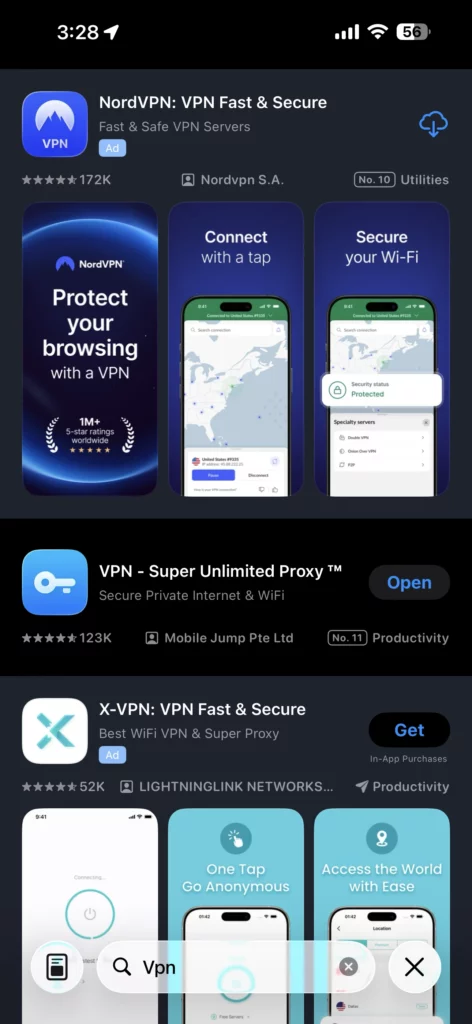
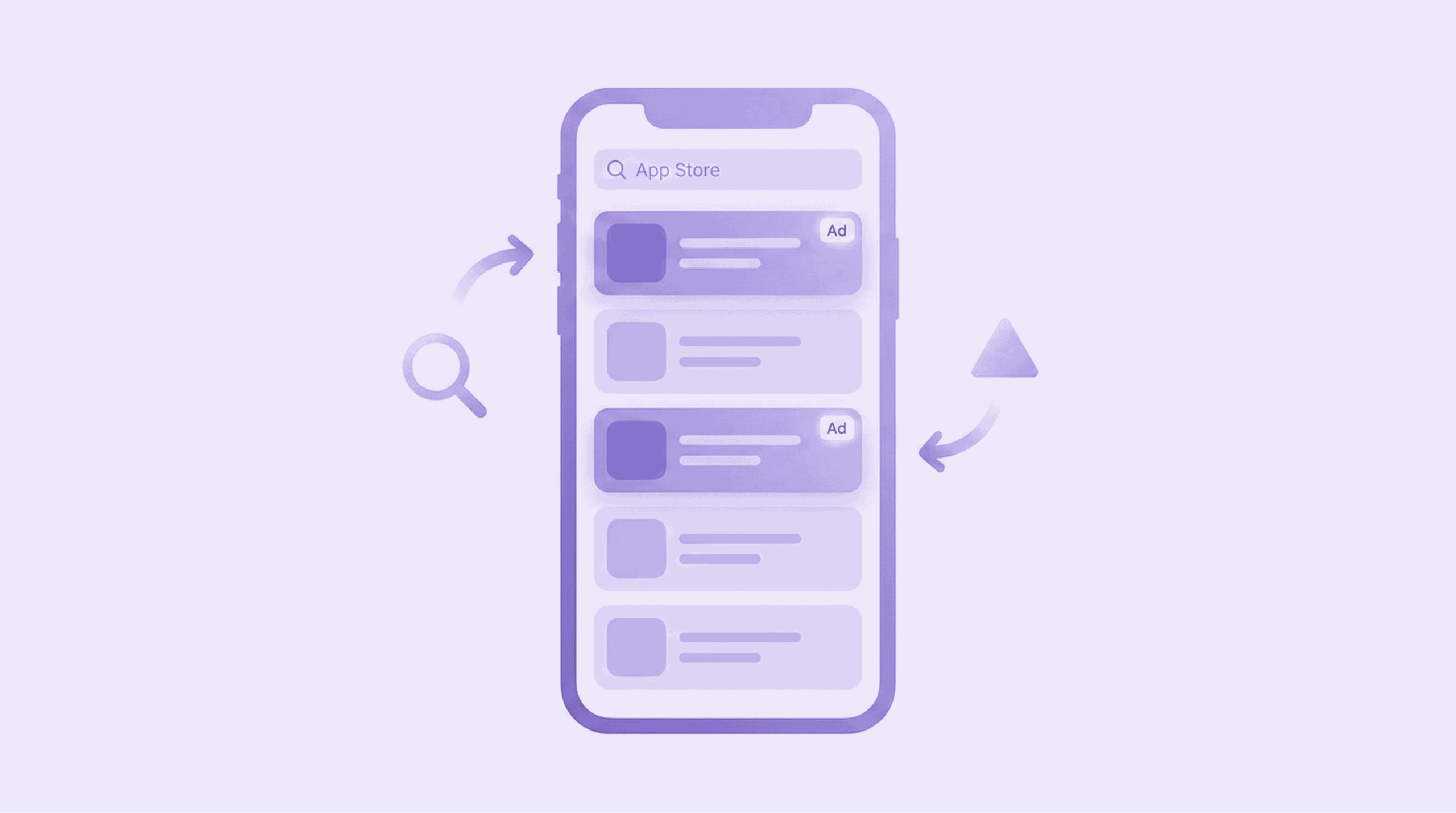
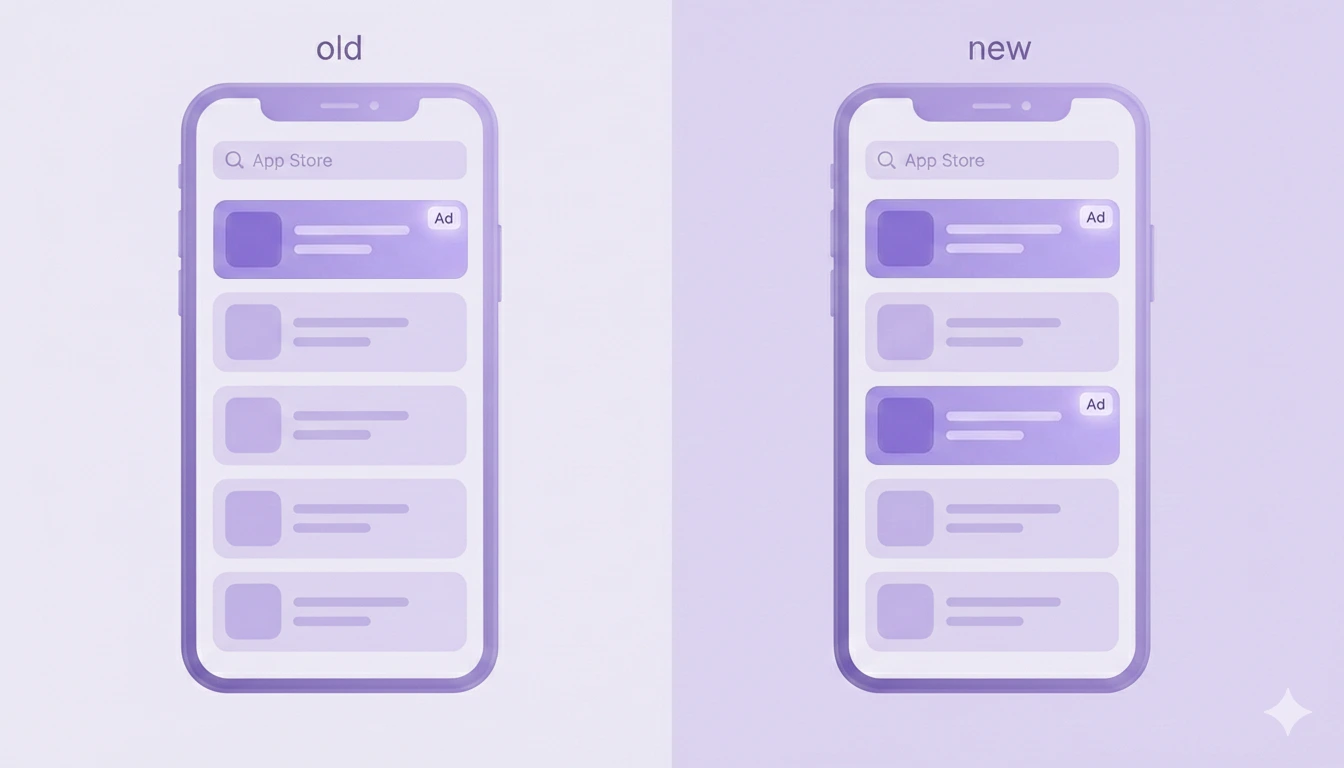
Apple Ads began rolling out a second ad placement inside App Store search results. Not above organic. Inside it. If you run a mobile app and you haven’t thought seriously about Apple Search Ads yet, now is the moment.
What Apple changed — and what it looks like
Apple confirmed the update in a direct email to advertisers. Live in the UK as of March 3 — Japan on March 10, global on March 17. The extra placement is only visible to users on iOS and iPadOS 26.2 or later.
In production, the new placement sits at position 3 — right inside the organic results stack. This is confirmed from live video taken in the UK App Store on March 3.
This is not a test. It is live.
Why position 3 matters more than it sounds
Before this change, positions 2 and 3 in App Store search results were almost entirely organic. They were the first results a user saw without paying for placement. For many apps, that traffic was free, reliable, and high-intent.
That traffic is now buyable.
Here is what this means in practice:
Organic clicks will shift to paid. A user searching for your category keyword now sees an ad at position 3. If that ad is from a competitor, the click that used to go to your organic listing now goes to them. Your ranking did not change. Your traffic did.
ASO (App Store Optimization) is no longer a shield. Good metadata, strong ratings, and keyword-rich descriptions still matter. But they cannot protect a position that can simply be bought around. A competitor with a lower organic ranking but a higher bid can now appear above you in search.
Branded traffic is newly vulnerable. A competitor can now sit at position 3 on your own brand keyword. Not because their product is better — because their bid is higher.
The App Store search surface is smaller than Google Search. Users rarely scroll past the first 5–7 results in App Store. In Google Search, there is more room. Here, each new ad slot has a disproportionately large effect. Adding one paid slot to a list of 7 results is not the same as adding one to a list of 30.
The implications follow a simple logic:
- App Store search is becoming pay-to-play. The portion of search traffic that can be captured through organic alone is shrinking.
- More placements mean more competition. As the new slot proves effective, more teams will start running Apple Ads — including teams that never bothered before.
- If you are not running Apple Ads, you are still participating — just as a donor. Your organic traffic is the supply that paid campaigns are now competing for.
How Apple Search Ads auction works for the new placement
You cannot directly buy position 3. Apple’s auction does not work that way.
Position is determined by ad relevance first, bid second. The more relevant your ad is to the search query — based on your app’s metadata, keyword match type, and creative — the higher you will appear. When relevance is equal between two advertisers, the higher bid wins.
This means two things:
First, teams with well-structured campaigns and strong keyword-to-creative alignment will naturally reach the new placement at lower cost than teams running broad, unstructured campaigns.
Second, throwing money at the auction without structure will not reliably get you to position 3. It will just make your spend less efficient.
More ad inventory in the auction also means more impressions are available across the board. In practice, this tends to push CPT (Cost per Tap) down over time for advertisers who are already organized. It is another reason why structure matters more now, not less.
What the right Apple Search Ads structure looks like now
The answer is not “start running Apple Ads.” Most teams that struggle with ASA are already running it. The problem is usually structure — specifically, the inability to tell which part of the campaign is actually working.
Here is the framework that holds up in this environment:
Segment by keyword intent, not just by keyword. The four main intent buckets are: branded, competitor, category (generic terms describing what your app does), and discovery. Each bucket has different conversion behavior. Mixing them in one campaign makes the data unreadable.
Match your creative to the search intent. The screenshot and headline that performs on a branded search is not the same one that performs on a category search. A user who types your app name already knows who you are. A user who types a generic category term does not. Treating them the same wastes both the impression and the click.
The in-app funnel must match the keyword intent — not just the ad. A keyword does not perform in isolation. If a user taps on a “habit tracker” keyword ad and lands on a generic onboarding with no connection to habit tracking, conversion breaks at the paywall — not at the ad. The full chain has to be intentional: keyword → user segment → onboarding → paywall offer. When the intent is carried through the entire funnel, trial-to-paid rates increase. When it breaks anywhere in the chain, you are paying for traffic that was never going to convert.
Track the metrics that actually predict revenue. CPI (Cost per Install) tells you the cost of an install. It does not tell you whether that install made money. The metrics that matter in this environment are LTV (Lifetime Value) per keyword, trial-to-paid conversion rate per intent segment, and ROAS (Return on Ad Spend) per keywords. Without these, you are optimizing for volume, not for profitability.
What happens to teams that are not running Apple Ads
When the new placement went live on March 3, most apps did not change anything. No new campaigns, no new bids. Business as usual.
What they will start to see: installs dropping. Revenue dropping. Conversion from search declining. No obvious explanation in their analytics — because the cause is outside their data. It happened in Apple’s auction, on a keyword they never tracked, in a campaign run by a competitor.
This is the specific pain of not running Apple Ads in 2026. It is not a missed opportunity. It is a silent loss. Organic traffic that was there last month is gone this month — and there is no alert, no notification, no dashboard that explains it. Just numbers going down.
The only way to see what is happening is to be inside the system. Teams running structured ASA campaigns could see the effect immediately on March 3: which organic positions absorbed new ad competition, where CPT shifted, and whether their own campaigns picked up the demand or lost it to competitors.
Teams outside the system saw nothing — until the revenue dip became impossible to ignore.
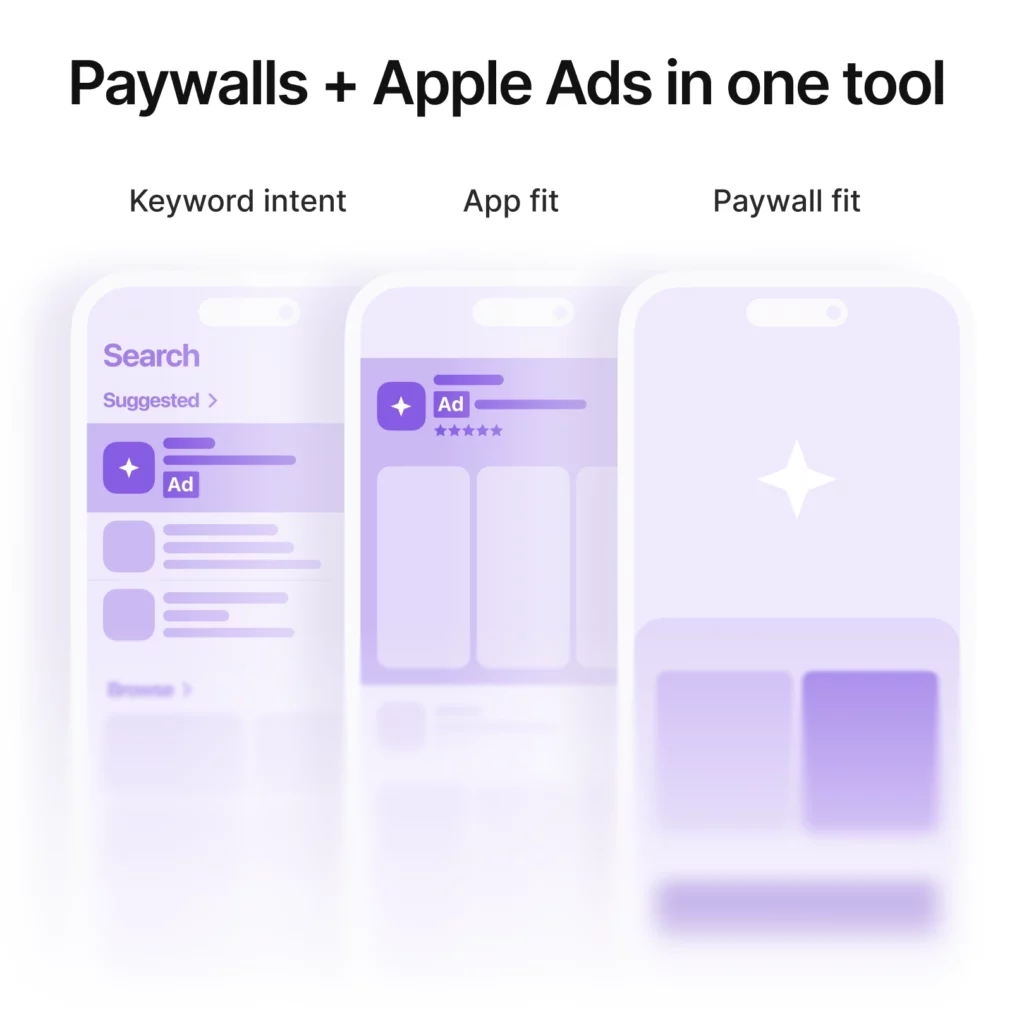
The ideal setup connects every layer: keyword → intent segment → paywall variant → subscription revenue. It makes ROAS visible per keyword, not just per campaign. It shows you where organic traffic is being replaced by paid — and whether you are the one replacing it, or the one losing it.
This is exactly what Adapty Apple Ads Manager is built for. We help with ROAS by keywords and intents, automations, and the full keyword → paywall → ROAS → LTV connection. See how it works here.
This is just the beginning
Apple made a deliberate business decision: monetize App Store search more aggressively. The second placement is the beginning, not the end. More placements, more markets, more competition.
For teams with structured Apple Search Ads campaigns, this is an opportunity. More inventory means more reach at potentially lower cost — if the structure is right.
For everyone else, it is a direct signal. The organic traffic that used to be free is now being competed for. Every month without a structured ASA presence is a month of organic traffic funding someone else’s growth.
The question is not whether to engage with Apple Search Ads. It is whether you have the structure to do it profitably.