Apple 12-month commitment subscriptions: What developers need to know

TL;DR:
- Apple shipped a new subscription type on April 27: Monthly billing with a 12-month commitment. Users pay month by month but can't walk away until they've completed all 12 payments. You can configure it in App Store Connect today and test in Xcode.
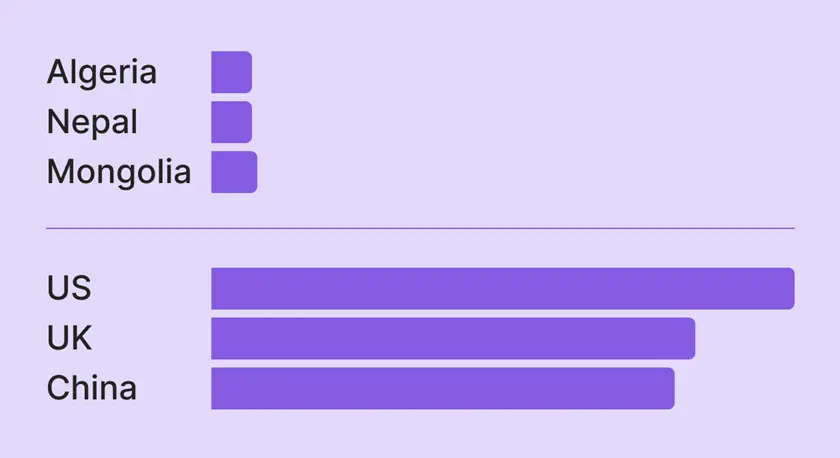
- It's not available in the US or Singapore. The US alone accounts for ~42% of global App Store revenue. That exclusion changes the math for most developers.
- The feature goes live with iOS 26.5 in May. Configure it now, but don't redesign your paywall around it until the US situation resolves.
On April 27, Apple announced a subscription type that promises the best of both worlds: Users pay monthly but commit to 12 months, getting the flexibility they want while you get the revenue predictability of an annual plan. Except it doesn't apply in the United States or Singapore. And the implementation is more involved than a standard subscription type. So before you start rebuilding your paywall, here's what you need to know.
What are Apple's monthly subscriptions with a 12-month commitment?
Monthly subscriptions with a 12-month commitment work like an installment plan. Users pay each month at your monthly price, but they agree upfront to complete all 12 payments before they can fully exit the subscription.
A few specifics worth noting:
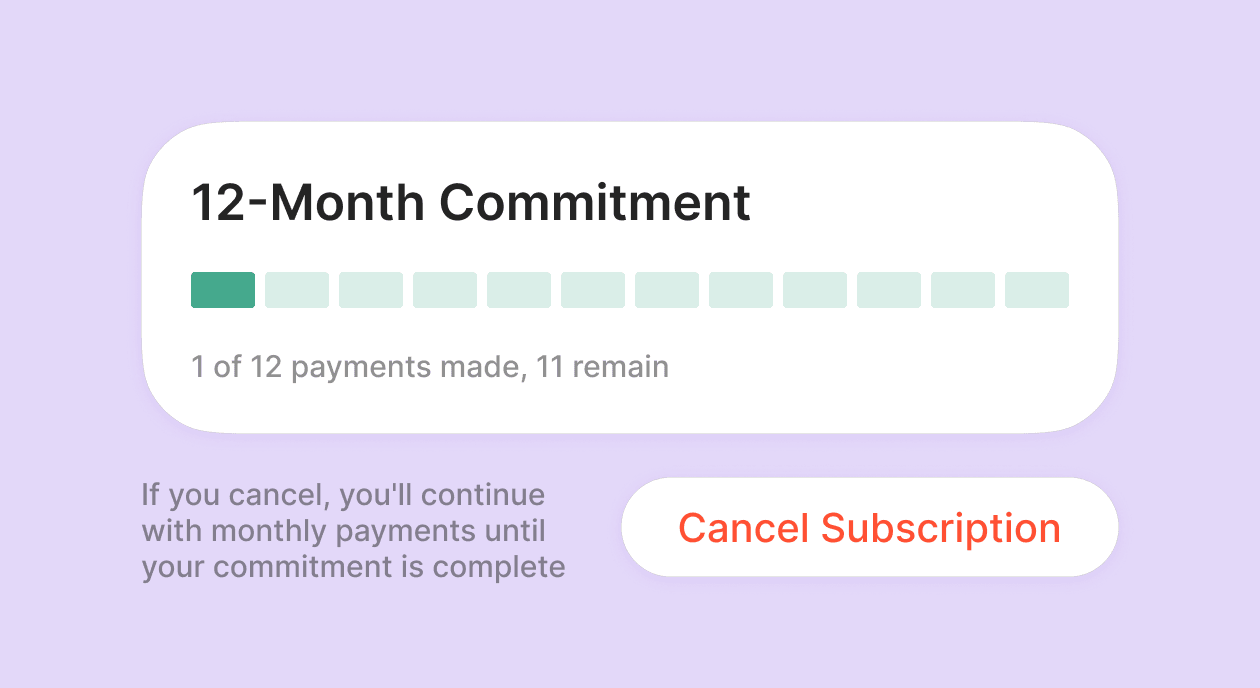
- Users can cancel at any time, but Apple continues billing them for the remaining months in their commitment period
- Apple shows users a payment tracker in their account (e.g., "4 of 12 payments completed") and sends email and optional push reminders before each renewal
- Developers choose which payment mode to offer at the point of purchase initiation
- Requires iOS 26.4 or later on the user's device, built with Xcode 26.5
You can configure the subscription type in App Store Connect right now. Users won't see it in production until iOS 26.5 ships in May.
Why are the US and Singapore excluded from this feature?
Apple gave no official reason for excluding the United States and Singapore. The regulatory context makes it readable enough: Apple is currently navigating antitrust pressure from the DOJ and the continued fallout from Epic v. Apple. A new subscription type that locks users into 12 months of payments would draw scrutiny in that environment.
Singapore's exclusion likely reflects the country's own consumer protection rules around subscription commitments. For developers, the exclusion lands hard:
- The US accounts for approximately 42% of global App Store revenue
- North America produces the highest revenue per install of any region ($0.39 median, versus $0.06-$0.09 in LATAM and Southeast Asia)
- Most subscription apps earn the majority of their revenue from US users
For any app generating more than half its revenue from US users, this feature doesn't change your Q2 or Q3 numbers. Apple hasn't signaled a US timeline. Based on how slowly the regulatory picture is moving, late 2026 or 2027 is a reasonable working assumption — treat it as a planning horizon.
How do you implement 12-month commitment subscriptions in your app?
This is where developers will get surprised. The 12-month commitment mode isn't a new price point on your existing subscription. Apple treats it as a separate payment space within your product, with its own prices and offers.
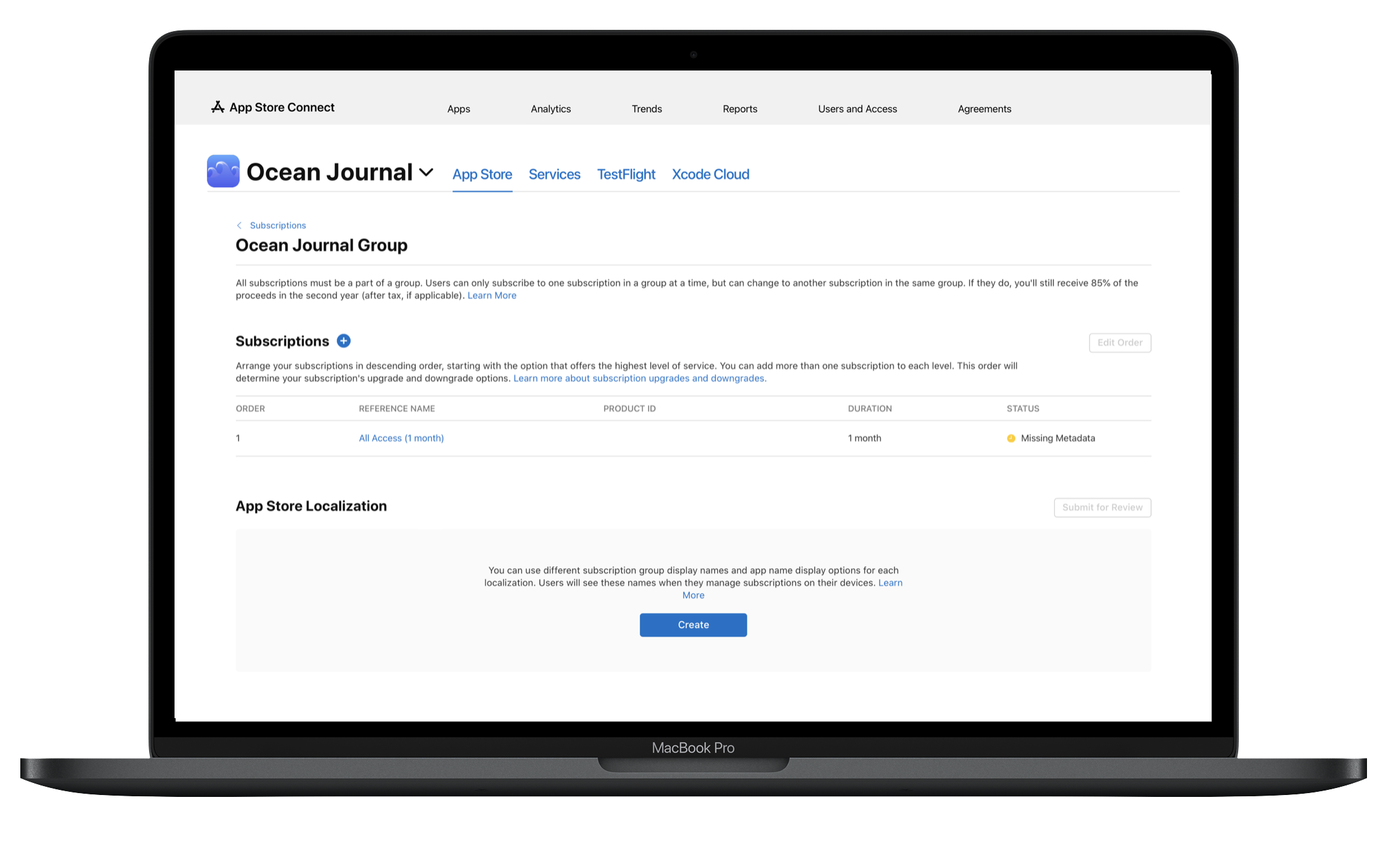
What that creates for your engineering and product team:
- Purchase flow logic: Your app needs to detect whether the user's device supports the commitment mode before offering it. You choose the mode at purchase initiation.
- Paywall design: Most developers will want to show both standard monthly and the commitment plan on the same screen, likely with a toggle. That requires a UI component your current paywall may not have. Apple's disclosure requirements apply here too — see iOS paywall design guide for what compliance looks like in practice.
- OS fallback: Users on iOS below 26.4 won't see the commitment option. Your paywall needs to render correctly for them without breaking the experience.
- Analytics: Two payment modes on the same paywall means you need separate tracking for each to avoid muddying your conversion and LTV data.
The SDK work itself is manageable, but the paywall UX is the harder problem. Presenting two monthly price points (one standard, one with a 12-month commitment) without confusing users takes iteration.
Does this replace annual subscriptions?
No, and the reasons are worth spelling out. Annual subscriptions collect revenue upfront. A user paying $99 today puts $99 in your account today. With a 12-month commitment at $9.99/month, you collect the same total over 12 months, and Apple's billing retry process needs to succeed 12 times instead of once. Involuntary churn from billing failures accounts for over 23% of App Store subscription churn — that's a material consideration when you're counting on 12 consecutive successful charges.
That said, the retention profile of commitment plans could rival annual subscriptions for apps where users genuinely need the product over time. Users who commit to 12 months behave differently than users on a monthly plan they can cancel with one tap.
The practical model for most apps becomes three tiers:
| Plan | Billing | Revenue timing | Churn risk | Best for |
| Monthly | Per month, no lock-in | Incremental | High | Price-sensitive users, emerging markets |
| 12-month commitment | Per month, 12-payment lock | Incremental, guaranteed | Low (locked) | High-intent users who resist annual upfront |
| Annual | Lump sum upfront | Immediate | Low (renewed) | Users ready to commit, highest LTV categories |
The question worth testing: what percentage of your monthly subscribers would take a commitment plan if you offered it? That number is unknown until you run the experiment.
Should you build support for commitment subscriptions now? Your geo-mix determines the answer.
- US revenue above 50%: Skip it for now. Configure the subscription type so you understand the mechanics, but don't allocate a roadmap to paywall changes. Revisit when Apple extends it to the US.
- Strong international revenue (EU, LATAM, APAC): Worth a test in Q2/Q3 2026. Run it against your current annual offer as an A/B test, not a full paywall replacement. Focus on Health, Education, and Productivity categories first.
- New app launching internationally: Build paywall support for commitment plans from the start. Retrofitting this later is more painful than architecting for it now.
Before you build:
- Map your revenue by country — know your actual US percentage, not an assumption
- Check your iOS version distribution among active users
- Identify monthly subscribers with 60+ day tenure — those are your commitment plan candidates
- Design and user-test the toggle UI before shipping
- Set up separate analytics tracking for each payment mode
Apple built a real solution to a real problem. The gap between monthly churn and annual sticker shock costs developers revenue, and a commitment plan addresses it directly. In markets where it's available, it's worth testing seriously.
The US exclusion is a genuine constraint, not a footnote. Most developers should monitor the situation, understand the implementation requirements now, and build when the US rollout comes. Scrambling to ship it then will cost more than doing the groundwork today.
We're tracking this feature closely and working through what proper support looks like on our end. We'll keep you updated — follow our blog for the latest.